BurnWeek Blog
Evidence-based guides on calorie tracking, protein, and eating with honest numbers — from the team behind BurnWeek.

The 5:2 diet: how twice-weekly fasting works
Everyone assumes the five 'normal' days quietly become a feast. When researchers actually measured them, people ate 19% less than they were allowed to.

TDEE activity multipliers: picking the right one
Three gym sessions a week move your multiplier by about 0.05. The rest is set by the other 23 hours — and most people put themselves a whole band too high.

Adaptive thermogenesis: metabolism's dimmer switch
It runs in both directions, it lives in your muscles rather than your organs, and a single hormone switches it off. None of that is what the folklore promised.
Should you add cardio to break a plateau?
The 30-minute group beat its own arithmetic; the 60-minute group fell short of it. Adding cardio to a stall works — just never in proportion to the work.
Adjusting protein and macros to break a stall
Rearranging your macros cannot reopen a closed deficit — the calories are identical by construction. Here is what the swap really buys, and what it costs.
The afterburn effect (EPOC): overhyped or real?
Published afterburn estimates range from 15 calories to 190. They aren't contradicting each other — they're timing one fire with different stopwatches.

How alcohol wrecks sleep (and next-day appetite)
The claim everyone repeats about alcohol and sleep is the one a 27-study pooling could not confirm. What survived is stranger, and starts at two drinks.

How alcohol calories work — the 'fourth macro'
Under 5% of the alcohol you drink gets turned into fat. It still costs you — because ethanol jumps the metabolic queue and everything else waits its turn.

Alternate-day fasting: what the research shows
Fast every other day and you'd expect to halve your intake. The measured figure is 37% - and the gap between 50 and 37 is the whole protocol.

Autophagy and fasting: hype vs evidence
The cell biology won a Nobel Prize. The "16 hours to unlock autophagy" ladder has no human study behind it — and the three that tried say something stranger.

Are barcode scans as accurate as they seem?
GS1's own rules require a new barcode whenever the pack size changes — but only sometimes when the recipe does. That asymmetry is the whole story.
Do any foods actually help you sleep?
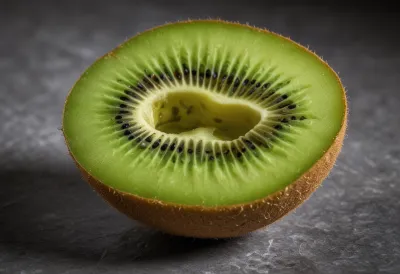
Kiwifruit's famous 42% improvement came from a trial with no control group. Open the primary papers behind every 'sleep food' and the pattern is hard to miss.

The best sleep schedule for weight management
There's no magic bedtime. Once you sleep enough, the lever left is a regular schedule aligned to your own body clock — and the data is surprisingly firm.

When to log your meals for the fewest misses
Children reported school lunch an hour later, or twenty hours later. The daily totals were indistinguishable. Almost nothing else about the records was.

The Biggest Loser study: what it taught us about metabolism
Everyone quotes the 499-calorie suppression. Nobody quotes the line beside it: the contestants with the deepest slowdown were the ones still holding their loss.

Screens, blue light, and late-night snacking
A study measured hunger every hour under blue-enriched light and found no effect. The screen-to-snack link is real — it just doesn't run through your appetite.

Body recomposition: lose fat and gain muscle at once
It's real — but bounded, slow, and nearly invisible on the scale, because you're swapping roughly equal masses. Here's who it works for and how to read it.

Caffeine, sleep debt, and the weight-gain loop
The genetic study reported as proving caffeine cuts 9.5 kg of body fat actually estimated 0.6 kg. The loop is real link by link — and it still never closes.
A field guide to counting calories when eating out
Nine cuisines have been burned in a calorimeter, and the ranking replicates. The catch: the scatter inside a cuisine is wider than the gap between them.

Calorie cycling: eat more some days, less others
Uneven days are the normal case, not the clever one. The question worth asking is whether planning the unevenness beats having it happen to you.
Using calorie density to sanity-check an estimate
A calorie estimate is unfalsifiable until you weigh the plate. One division turns it into a claim about hidden fat that you can actually go and check.

The condiment problem: small add-ons, big totals
Condiments are about 1% of the average person's calories. That average is hiding a category where one tablespoon of "mayonnaise" runs from 10 to 99 calories.

When calorie tracking turns unhealthy: warning signs
Real-time food monitoring is a working part of the leading eating-disorder treatment. Same act, opposite function — and the difference is what tells you.
Calorie tracking vs intuitive eating: can you do both?
One practice has the psychological evidence, the other has the arithmetic. The covert feeding trial that explains why appetite cannot run a deficit on its own.
Why fat has 9 calories and protein has 4
Nobody burned your granola bar. The 4/4/9 is arithmetic from the 1890s — and USDA's own table prices egg protein at 4.36 and vegetable protein at 2.44.
Beans: protein, fiber, and calorie counts
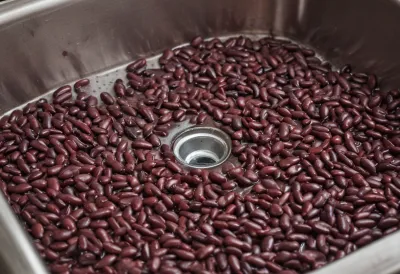
A can of kidney beans carries about a gram of sodium — and roughly a third of what you paid for is brine. Draining fixes most of it; rinsing barely helps.
Chicken breast: calories and protein per serving
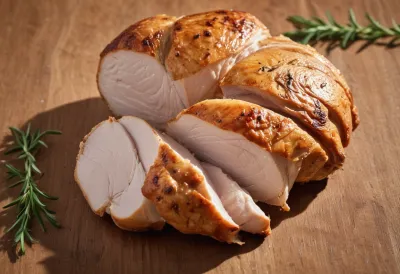
The chicken numbers everyone quotes rest on a USDA measurement last updated in 1979, from 16 samples. The breast has changed composition since.

Cottage cheese: the high-protein comeback food
It ties nonfat Greek yogurt for protein per calorie almost exactly. Then a single cup delivers 917 mg of sodium — 40% of a day's limit — and nobody mentions it.

Eggs: calories, protein, and the yolk question
Discard the yolk and you remove three-quarters of the calories — but also 43% of the protein. The trade is worse than the egg-white omelet implies.
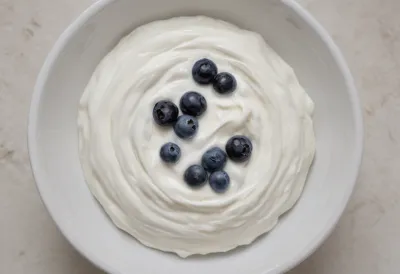
Greek yogurt: a protein-per-calorie standout
Straining discards up to 2.75 kg of whey per kilogram of finished yogurt. That is where the protein concentration comes from — and where the calcium goes.
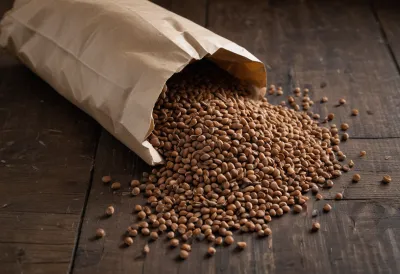
Lentils: cheap protein and fiber by the numbers
Most of a lentil's fiber and about 80% of its polyphenols sit in a seed coat that red lentils had stripped off before you bought them.
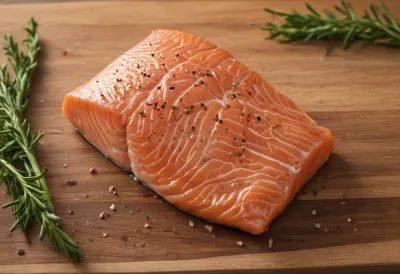
Salmon: calories, protein, and omega-3s
Chum, coho, king, farmed Atlantic — all sold as salmon, all quite different fish. The leanest carries under a third the omega-3 of the fattiest.

Tofu: calories and protein for plant eaters
Two USDA records, both labeled "firm." One has twice the protein of the other and three times the calcium. USDA's own note explains it: nobody defines the word.
Calories burned cycling, by intensity
A cycled mile costs about a third of a run mile — and unlike running, it gets dearer the faster you go. The famous 1 kJ = 1 calorie rule hides a bad assumption.

Housework and chores: the calorie burn adds up
Vacuuming doesn't clear the threshold researchers use for "moderate" activity. So why does a Saturday of housework outburn a gym session? Hours, not effort.

Calories burned running: the mile-vs-minute myth
A mile is not a flat 100 calories. Running's cost is paid by distance, so pace barely moves it — your body weight does, and your watch reads it high.

How many calories does lifting weights burn?
Less than the effort feels like — a session burns like a brisk walk, because you lift for seconds and rest for minutes. The payoff was never the burn.

How many calories does swimming burn?
Two people swim the same hour in the same pool and one spends far more. In swimming, skill sets the price — and cold water does something odd afterwards.
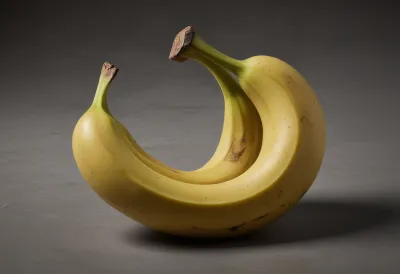
Banana calories and why size matters
Five USDA size classes hide behind one word. And much of what's in your hand is peel you were never going to eat — which is where banana logs go wrong.
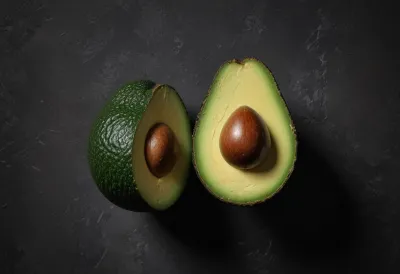
Avocado calories: healthy fat, real numbers
A California avocado is about 227 calories; a Florida one about 365 — despite being leaner per gram. Then USDA's own entries disagree by a third.

Bread calories: slice size and the fiber angle
White or whole grain is the decision everyone agonizes over. It moves the number 5%. The decision nobody makes — how thickly the loaf was cut — moves it 200%.
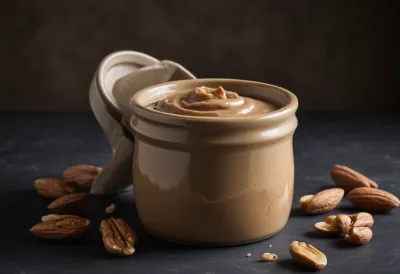
Nuts and nut butter: calorie-dense but filling
The label on a bag of almonds overstates what you get by a third. On pistachios, by 5%. Both numbers came from the same lab — and the same industry.
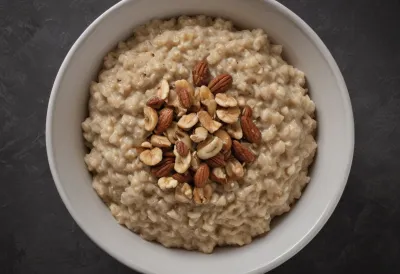
Oatmeal calories: the topping trap
Nobody overeats oats. They overeat what goes on the oats — and an ordinary-looking bowl can run four times its base before anyone reaches for sugar.
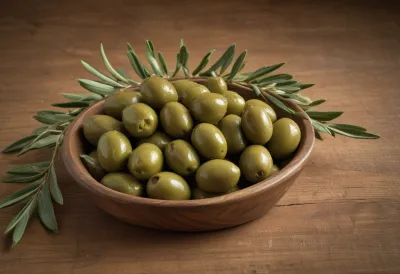
Olive oil: the calories hiding in a drizzle
Harvest, estate, cold-press, polyphenol count — everything you pay a premium for moves. The one number that never budges is the one nobody checks.

Pasta calories: dry vs cooked, and portion reality
Everyone worries about the dry-versus-cooked doubling. The bigger error is already in the cupboard: swap shells for elbows and the same cup gains 216 calories.

Potatoes: surprisingly filling for the calories
Raw, boiled, baked or dried to flakes, a potato holds about 3.7 calories per gram of solids. Everything else people argue about is water — or oil.

Rice calories: why cooked vs dry trips people up
Same three words, same measuring cup, 470 calories of difference. And cooked-versus-dry is only half of it — the cup itself is the part that moves.

How much cooking oil actually ends up in your food?
You poured two tablespoons — about 240 calories. The courgette absorbed roughly 27 of them. The awkward question is what happened to the other 213.

Can you actually 'damage' your metabolism?
Everyone measures the way down. The rarer records — monthly metabolic testing through a year of recovery — show the rate climbing back with the fat.
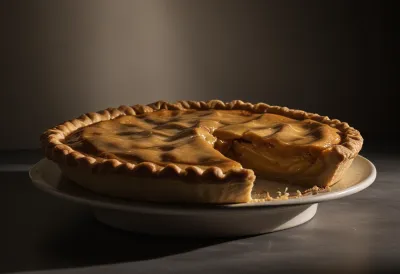
Does one cheat meal undo your progress?
A 1,300-calorie overshoot spends about a third of a week's deficit — so why does one meal so often end the diet? The answer is in the word, not the food.

Chronic short sleep and long-term obesity risk
Sixteen years of short sleep bought 68,183 nurses an extra 1.14 kg. Run the arithmetic and the famous epidemiology is worth about 1.5 calories a day.

Chrononutrition: eating in sync with your body clock
The field has three dials — clock time, regularity, frequency. Almost every argument you've read is about one of them, and it isn't the best-evidenced one.

Your body clock and how it times metabolism
The same meal raises glucose 17% more in your biological evening. Three separate clock effects get collapsed into one claim, and they are not the same size.
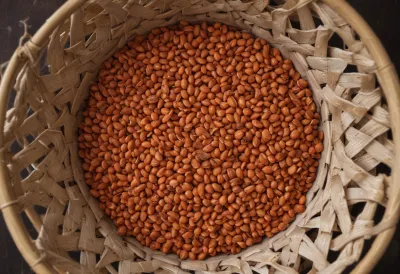
Complete vs incomplete proteins, explained simply
Your body cycles four times more protein through itself each day than you eat. That buffer is why the protein-combining rule you were taught is obsolete.

The constrained energy model: why exercise burns less than you'd think
The model explaining why training doesn't simply add calories is also the most contested idea in energy metabolism — and its critics found a real hole.

Cortisol: the stress hormone that drives eating
Two labs ran nearly the same stress-and-snacks experiment. One found cortisol reactivity predicted who ate more. The newer one found it predicted nothing.

Why crash diets backfire
Not in the way you were told. In head-to-head trials crash diets lose more weight and are not regained faster — the bill arrives in bone, appetite and behavior.
The hidden errors in crowd-sourced food databases
A trained researcher entering known meals still hit the wrong portion in up to one entry in six. The food's identity was almost never the problem.

Diet breaks: why a planned pause can help
One famous trial says breaks get you more fat loss. Twelve trials pooled say they don't — and the thing they do protect is not the thing you were promised.
Diet fatigue: the adherence problem behind plateaus
Lapses fall for three months, then climb again. Diet fatigue is a measured curve, not a character flaw — and hunger predicts it where mood doesn't.
Are fat calories 'worse' than carb calories?
The folklore turns out to be directionally right and almost worthlessly small — and every mechanism usually offered for it is the wrong one.

Rounding rules: how labels hide small calories
Rounding is not the scandal it sounds like — the increments run both ways and cancel out. Exactly one rule doesn't, and it is why your cooking spray says zero.
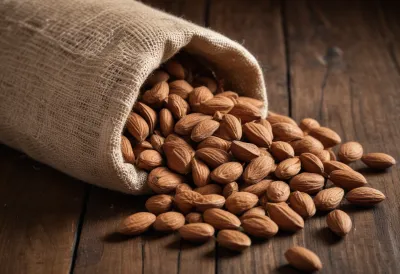
Do you absorb every calorie you eat?
Whole almonds measured 4.42 calories a gram. Chop them and it rose to 5.04; grind them to butter and the discount vanished altogether.

Does breakfast 'kickstart' your metabolism?
Sealed in a metabolic chamber, the breakfast-skipping day burned more, not less. The slogan survives because almost nobody checks the half of it about fasting.

Does caffeine actually burn calories?
Caffeine really does mobilise fat. The tracer studies then show three-quarters of it being put straight back — which is not what a label means by 'fat burner'.

Cold exposure and brown fat: real calorie burn?
Brown fat is real physiology and the wrong hero. The tissue everyone credits contributes about as much as a bite of toast — your shivering muscles do the work.

Does eating small, frequent meals speed metabolism?
Grazing doesn't stoke a furnace. At equal calories, six meals and three burn the same 24-hour total — so eat on the schedule you'll actually keep.
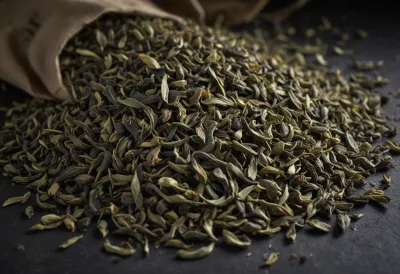
Green tea and metabolism: how much does it help?
One respiration chamber says four percent. Six randomised trials outside Japan say minus forty grams. Both are good studies, and the gap is the story.

Does staying up burn extra calories?
Seven people sealed in a calorimeter priced one sleepless night at 134 calories. The part nobody quotes is what their bodies did the following day.

Does meal timing matter for fat loss?
Eat earlier and your body does burn more of the meal and crave less. So why isn't meal timing a fat-loss strategy? Because it's a tiebreaker, not the game.

Do spicy foods really boost your metabolism?
Pool the trials properly and the heat itself does nothing significant. What survives is a non-pungent analog — sold by the firm that ran the trials.

Standing desks: do they actually burn calories?
Every standing-desk calorie figure is an average. The spread behind it runs from minus 12 percent to plus 107 — and it describes almost nobody.

Does eating late ruin your sleep?
The largest number in the whole 'don't eat late' literature comes from gastroenterology, not sleep science — and one carbohydrate study points the other way.

Does when you eat matter more than what you eat?
Timing gets the headlines. But in a locked metabolic ward, changing the food moved 500 calories a day — and the clock only takes over when your body clock does.

Does drinking water boost metabolism?
The famous "+30% metabolic rate" study has failed to replicate twice. What survives is thermodynamics: about 7 calories to warm half a litre.

Should you eat less or more to break a plateau?
Eating more cannot open a deficit — that's arithmetic. So what are the people who swear by it actually buying? Two mechanisms, and only one of them is food.

Why the same meal hits harder at night
Give someone melatonin at 9am and their glucose response worsens too. So it isn't the hour on the clock — it's a hormone arriving at the same time as the food.

Does a shorter eating window help you lose weight?
A tighter eating window sounds like a fat-loss hack. The trials say it only works when it shrinks how much you eat — and for many people, it barely does.
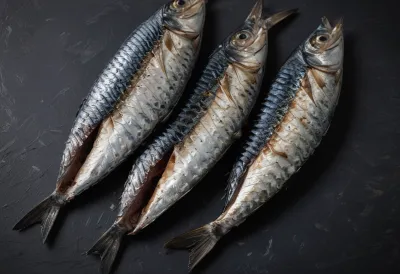
Omega-3s and why some fats are essential
Young women converted labelled ALA into DHA at 9%. In young men, the same tracer produced no detectable DHA at all — across three weeks of looking.

How to estimate calories in fried foods
Four-fifths of the oil in fried food goes in after it leaves the fryer — so the calories were still being decided while your order sat on the pass.
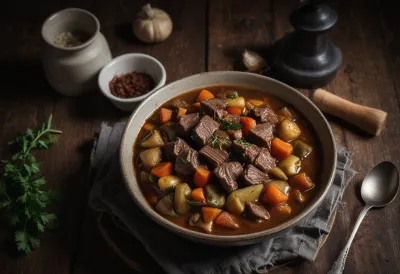
How to estimate calories in soups, stews and casseroles
Bite for bite, a uniform food varies 1.9% in energy per gram. A mixed one varies 41.2%. Your ladle isn't measuring a stew — it's sampling one.

How to estimate pizza calories by the slice
Twenty-five Margherita pizzas, one recipe, a 2.8-fold spread in calories. Pizza looks like the easiest food to count, and the unit is the trap.
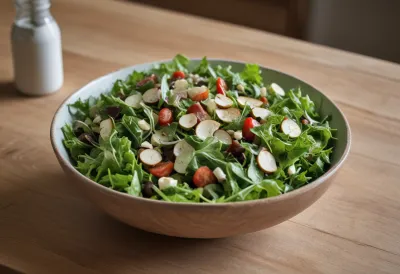
Why salads are sneakier to count than you think
The greens fill the bowl and supply 22 calories. The dressing you barely see supplies 103. It's the one dish where your eye and the arithmetic disagree.

How to estimate takeout and delivery calories
A laboratory burned 157 takeaway meals and found 1,327 calories in the average one — 49% more than the chain meals people quietly compare them to.
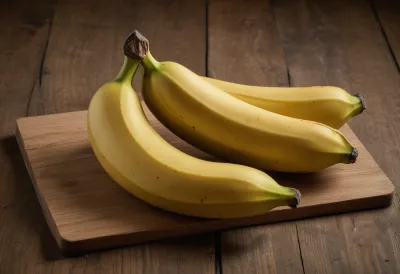
Does exercise make you hungrier?
The answer flips depending on whether you ask an hour after training or three months in — and on whether intake was measured with a food diary or an isotope.
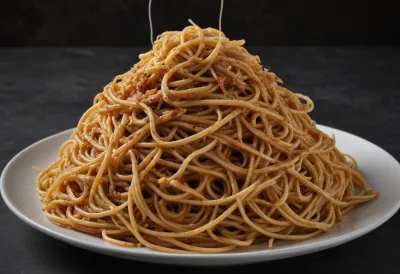
How accurate is eyeballing your portions?
Your eye doesn't just miss — it compresses. Which quietly guarantees that your worst estimate of the week lands on the plate with the most calories on it.

How fasting affects blood sugar and insulin
"Fasting fixes insulin resistance" and "fasting causes insulin resistance" are both true. Which one you meet depends on how long you've gone without food.
Should you work out fasted?
Fasted cardio really does burn more fat in the session — about 3 grams of it. Four weeks later the fasted and fed groups looked identical. Here's where it dies.

Does hunger really fade when you fast?
Week one is the worst possible test of whether fasting suits you: it measures the hunger signal guaranteed to change, before the one that never does arrives.

Does fasting burn muscle?
The claim that fasting eats your muscle rests on one trial statistic — and the difference behind it is smaller than the scanner's own margin of error.
The 20% rule: why food labels can be legally off
Nobody measured your package. The printed calorie count is a legal claim about a 12-unit lab composite, held to a tolerance that leans one way — low.
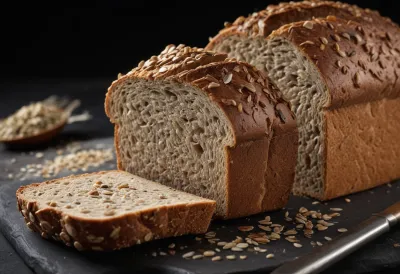
Fiber: how much you need and why it matters
It's the one number on the nutrition label almost nobody tracks — yet the evidence for hitting it beats most things people obsess over. Here's the target.
The calories people forget: drinks, oils, and bites
Show someone photographs of their own day and they recover roughly half the calories their food recall missed. The other half was never a forgotten item at all.
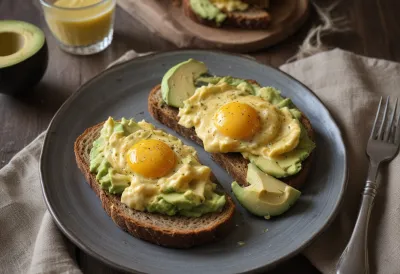
Does eating most of your calories earlier help?
A big breakfast is the easiest diet advice to follow badly. In one Cornell crossover, 624 morning calories bought back only 144 at the next meal.

Ghrelin and leptin: your hunger and fullness hormones
Delete the hunger hormone entirely and mice eat exactly as much. The tidy on-switch, off-switch story is wrong in a way that matters for dieting.

Glycemic index: useful tool or overrated?
Retested in the same person, white bread's glycemic index swung more than it varies between different people. The chart is far steadier than the biology.

Are there really 'good' and 'bad' carbs?
Simple vs complex, good vs bad — the labels we sort carbs by are mostly wrong. Two subtler lines predict how a carb treats you, and they beat a GI chart.
Grazing vs three meals: which suits you?
The word "grazing" names two different behaviors, and the research that makes it look bad is mostly measuring the one you didn't mean.

The hidden calories stalling your progress
They're not hidden by your metabolism — they're missing from your log. Drinks, absorbed oil, between-meal bites, outgrown portions, and how each slips past.

Does HIIT really burn more calories?
Two meta-analyses found no advantage at all. A bigger 2024 synthesis found one — and it comes to less than a single percentage point of body fat.

Hormones that make weight loss harder (thyroid, PCOS, cortisol)
Every one of these conditions has been measured against a control group. The handicaps are real and they are all smaller than the stories built on them.

How accurate are TDEE calculators, really?
Ten published models, 56 people, 14 days of isotope tracking. The predictions were right within 10 percent for fewer than half — and worst for the fittest.

Does cooking change a food's calories?
A calorimeter burns all of a raw egg; your gut digests half. Cooking closes that gap — so the calories you absorb can climb while the label never moves.
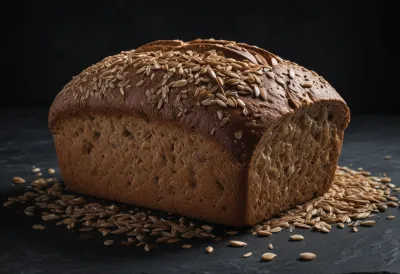
Does fiber reduce the calories you absorb?
In a metabolic ward, the same high-fiber diet left one person 73 calories a day short and another 390. The average is the least interesting part of this result.
How heart rate is used to estimate calories burned
The equation behind every burn readout was validated on groups, and its authors said so in print. Then the fitness industry pointed it at one wrist.

How long do weight-loss plateaus really last?
A fluid stall clears itself in days. A real one has no clock at all — and in the largest record of what happens next, the common sequel isn't resuming.
How long should you actually count calories?
Tracking during the diet did not separate the people who kept the weight off. What separated them was the year afterwards, when nobody was asking.

How many calories you burn doing nothing
Sealed in a metabolic chamber with nothing to do, two people the same size still differed by up to 800 calories a day. "Nothing" is not one number.

Does thinking hard burn calories?
Forty-five minutes of hard cognitive work cost three calories and bought two hundred and twenty-nine. The brain is expensive — just not in the way you'd hope.

How many carbs do you actually need?
The internet quotes a carb target like it's physics. It isn't — the right number swings fivefold with your training, and for weight loss it barely matters.

Why two people your size burn different calories
Twelve pairs of identical twins ate the same 84,000 surplus calories. They gained between 4.3 and 13.3 kg — and the spread was organized by genome.
How much dietary fat should you eat?
Most fat advice is about eating less. The more useful question is how low you can go — below a floor, you stop absorbing vitamins and your hormones notice.
How to break a genuine weight-loss plateau
Most stalls fix themselves with patience. For a real one: recount, move more, recalculate — and a diet break, if you're the person it actually helps.
How to make calorie tracking a habit that sticks
A free food app, 189,770 downloads, 2.58% still logging. The habit research says the fix isn't discipline — it's shrinking what you are trying to automate.
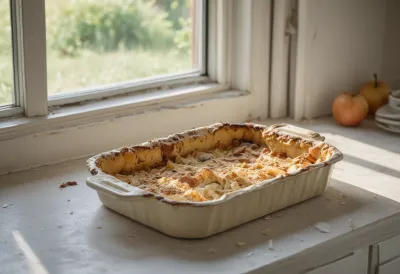
How to count calories for a recipe you cooked
A recipe is the one meal you can compute rather than guess. Then you divide the pot — and 312 supermarket recipes show how wide "serves 4" really is.
Counting calories when you batch-cook and meal-prep
Batch cooking is the highest-accuracy, lowest-effort way to track. A randomized trial found something odd about what is doing the work: the plan, not the food.

What to do about the days you forget to log
The days you forget to log are not a random sample of your week. They are the big ones — which is why dropping them and zeroing them are both wrong.

How to log a meal when you don't know the recipe
The dish someone else cooked is not a bigger number — it is a different mixture wearing the same name. What the FAO does when the recipe is missing.
How to log beer, wine and cocktails
Researchers bought and measured 480 drinks in 80 bars and restaurants. Wine glasses held 43% more alcohol than a standard drink. Nobody in the room knew.

How to log lattes, cappuccinos and coffee drinks
Nearly 3,000 coffee-shop purchases were counted at the till. Brewed cups averaged 63 calories; milk-based ones averaged 239 — none of it the coffee.
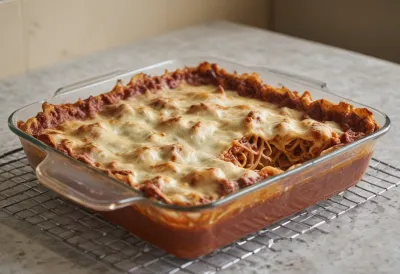
How to log leftovers and second helpings
You already logged this food once. So why does the second plate of it vanish from your diary? The failure isn't estimation — it's arithmetic nobody does.

How to review your food log and actually learn from it
Most patterns people find in a week of food logs are noise. Here is what a week can genuinely resolve, measured across 315,000 logged meals.

How to set a weight goal you'll actually reach
Patients set goals about three times what treatment delivers — and the trials say those goals don't hurt the result. They hurt how you grade it. Here's the fix.

Setting up a food diary you will actually keep
Going electronic nearly doubled how often people logged — and barely moved their weight loss. What separates a diary you keep from one that teaches you.

How to start intermittent fasting safely
Leaping straight to a 16-hour fast is how most beginners quit in week one. The safe way in is gradual — and knowing the few signs that mean you should stop.

How to stop late-night eating for good
The clinical night-eating literature's advice includes a chain on the refrigerator. That's the tell: the evening is not when your resolve is available.

How to track calories at parties and holidays
People report gaining four times what the scale actually records over the holidays — and that gap, not the buffet, is what ends most December food logs.

Tracking calories when you eat out most days
Chasing accuracy on every restaurant meal is the wrong project. Save one estimate per repeated order, then let four weeks of weight data correct it.
How to keep tracking when life gets busy
The days you can't find time to log are built from the food that is easiest to log. What the clock studies say about tracking with no time.

Tracking calories with unfamiliar foreign foods
Your app's calorie values survive the border better than your eyes do. What breaks abroad is the portion, and 122 travellers show what that costs.
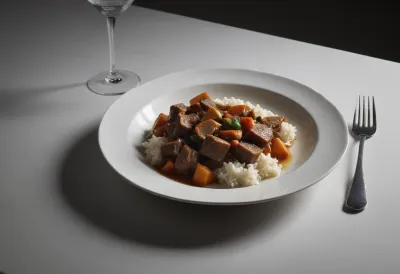
Tracking calories from a shared family dinner
Nobody divided the pot, you didn't measure your share, and the research says your plate was already bigger before anyone sat down. What to log anyway.

How to count calories without an app (pen and paper)
Handing people a calorie app bought two extra tracking days a week and zero extra kilograms. What a notebook has to contain to do the same job.
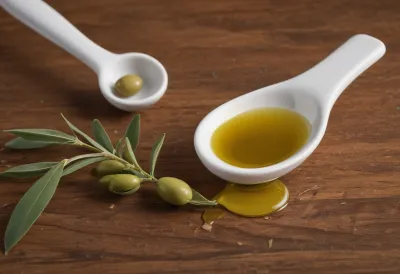
How to track the oil and butter you cook with
Portion training improves your estimates for almost every food group. Fats and oils are the documented exception — and they cost about 120 calories a spoonful.

How to track macros and calories at the same time
Your macros will never add up to the calorie line on a label, and rounding alone explains 10 to 20 calories of it per serving. That is not a bug to chase.
Better ways to track progress than the scale
"Ditch the scale, use a tape measure" is half backwards. Published measurement error says the tape is the blunter tool — here is how to use it anyway.

Practical ways to sleep better for weight loss
The moves that shift your sleep happen in daylight, not at 11pm. A coffee six hours before bed cut measured sleep by over an hour — and no one felt it.

How insulin shapes hunger between meals
Everyone calls insulin the fattening hormone. Put it directly into the brain and people eat less — and the lowest-insulin diet ever tested made people eat more.

Intermittent fasting for women: what's different
The fear that fasting wrecks female hormones is aimed at the wrong variable. What suppresses them has a measured threshold — and it counts calories, not hours.
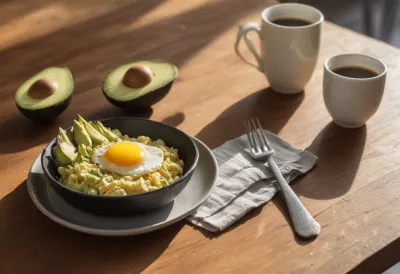
Is intermittent fasting just skipping breakfast?
Run 16:8 the usual way and you're just skipping breakfast. But skip dinner instead and the same fast may treat your metabolism better. Which meal should go?

Is your calorie deficit actually too small?
You can't measure the deficit you're in. You set it from two estimates and grade it with an instrument that varies 23% within a single person.

Does eating late at night make you gain weight?
Two research literatures answer this differently, and the reason is in the method: one measures 'late' on the wall clock, the other on your own body clock.
Leptin resistance: when 'full' signals stop working
The NIH once convened a workshop because nobody could define the term. There is still no test that diagnoses it in a person — and that gap is the whole story.
Leucine: the amino acid that flips the muscle switch
There is a protein in your cells whose job is to hold leucine and let go. Flipping that switch is necessary to build muscle — and nowhere near sufficient.
Should you log food before or after you eat it?
Students who ordered lunch in advance took 100 fewer calories. The sandwich was identical. Everything that shrank was something they had added around it.

How to speed up logging the meals you eat often
Twenty-one thousand people logged 2.6 million meals over two weeks. For the median person, nine items accounted for half of everything they entered.
Do macro ratios matter for weight loss?
The trial everyone cites to prove macro splits don't matter mostly failed to create different splits. Read the fine print and the answer gets more interesting.

Finding your new maintenance after weight loss
Everyone expects a broken metabolism. The best-matched study found weight-reduced women burning within 44 calories a day of women who had never been overweight.

Does how often you eat affect your weight?
Surveys said grazers stay leaner. A 50,000-person cohort found the reverse. The trials meant to settle it are graded 'very low certainty' — here's what holds.

Melatonin, meal timing, and hunger
A review screened 3,695 papers on melatonin and appetite and found two human trials. The gap between what rodents show and what people know is the whole story.

How metabolic adaptation causes plateaus
Your body defends its energy budget from two directions at once. Measured side by side, the appetite arm pushes about three times harder than the metabolic one.

Does your metabolism stay low after weight loss?
The 500-calorie figure everyone quotes comes from 14 people who lost 58 kg each. Measured in ordinary maintainers, the gap is small enough to argue about.

Do 'metabolism-boosting' foods work?
Green tea, chili and coffee do nudge your metabolism — by a few dozen calories a day, erased by one bite. The lever that works lowers intake, not raises burn.
Micronutrients vs macronutrients: what's the difference?
Macros come with a wide safe plateau you can wander around inside. Micronutrients have a floor and a ceiling — and the gap between them is often narrow.

Mifflin-St Jeor vs Harris-Benedict: which equation wins?
One equation dates from 1918, the other from 1990, and the newer one usually wins. Then somebody measured 85 adults over 65 and the ranking turned over.

When the scale stalls but you're getting leaner
"It's muscle" is the most comforting explanation for a flat month, and usually the wrong one. Muscle is too slow. What's hiding your progress is faster.

Why 'muscle weighs more than fat' is misleading
A kilogram is a kilogram. The real claim is density — and measured against cadaver data, even that is far smaller than the side-by-side props imply.

Do naps help or hurt weight management?
Naps under an hour carry no metabolic risk. Past 60 minutes, diabetes odds rise 46% — but the strongest signal isn't the nap. It's the sleepiness behind it.

What weight-loss 'maintainers' actually do
The registry is the best description we have of what successful maintenance looks like — and structurally incapable of telling you how likely success is.
What 'net carbs' really means
The subtraction is exactly right for erythritol and clearly wrong for maltitol — and the label gives you one word for both. Where the arithmetic quietly breaks.

How to eat well on the night shift
Eating a full meal at half past midnight showed up six hours later in how people drove home. Here is the night-shift eating plan the trials actually support.
OMAD (one meal a day): does it work?
The objections people raise against OMAD - protein absorption, muscle loss - are the weak ones. The findings that should give you pause get almost no airtime.

Can too much sleep also cause weight gain?
Depression predicts long sleep almost three times more strongly than obesity does. That ladder of odds ratios explains the U-shaped curve better than fat gain.
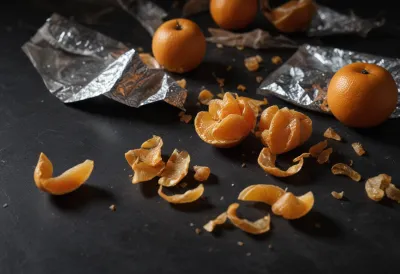
Photo food journaling: log first, estimate later
Forty adults ate under doubly labeled water, then reviewed photos of their own day. The images put 265 foods back into the record — nearly all snacks.
How to photograph food for a better calorie estimate
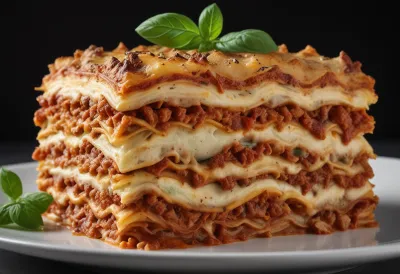
A camera records the top of your dinner, not its mass. Five capture moves hand the estimate back the depth, scale, and oil the lens quietly throws away.
Plateau, or is your body at its set point?
Almost nobody who thinks they've hit their floor actually has. Arrival is a multi-year process with a symptom picture — and a stall at month six is neither.
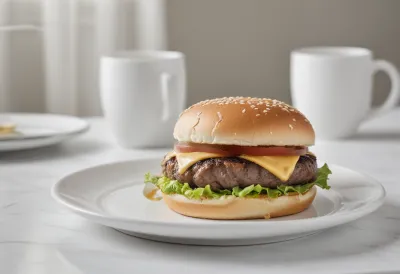
Portion distortion: why servings quietly grew
Portions really did grow — a hamburger gained 97 calories, a Mexican dish 133. But the two conclusions usually drawn from that don't survive testing.
Does high protein harm your kidneys? The evidence
The kidney warning came from a 1982 hypothesis about kidneys that were already failing. Nephrologists argue the reassuring trials measured the wrong thing.
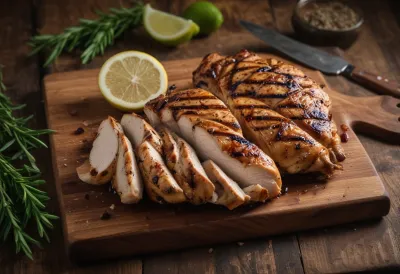
Protein's role in keeping muscle while dieting
Measure both sides of the ledger during a 40% deficit and breakdown doesn't move at all. Muscle loss on a diet is a building failure, not a demolition.
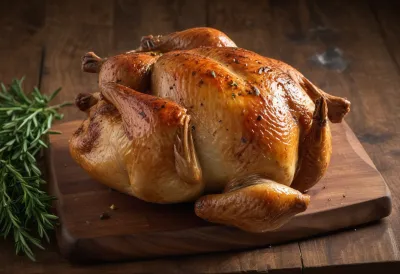
Should you spread protein evenly across the day?
Even beat skewed by a third on the laboratory measurement. Then two trials ran the same manipulation for 16 weeks and found nothing at all in the bodies.
Why protein needs rise as you age
Aging muscle ignores a dose that works fine at 25. One experiment pinned the failure to a single amino acid — and a six-month trial then found nothing.
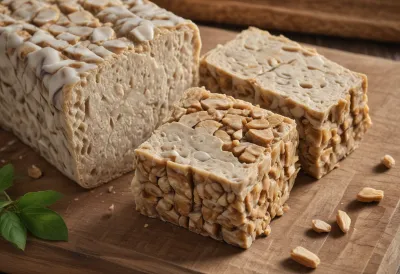
Hitting your protein target on a plant-based diet
Vegans eat 44% less lysine than meat-eaters and still clear the requirement by half. The thing that actually stops you is arithmetic, not amino acids.
The protein leverage hypothesis: do we eat until sated on protein?
Both camps agree the mechanism is real. The fight is over how much it explains — and over one question neither side has answered about what people reach for.

Do you actually need protein powder?
Whole eggs beat egg whites for muscle protein synthesis at matched protein. Twelve weeks later the two groups had built the same muscle. Both results are real.

Quick-add calories vs full entries: when each is fine
One arm logged everything and managed it on 49% of days. The other logged almost nothing and managed 97%. They lost the same weight — 3.4 kg against 3.3 kg.
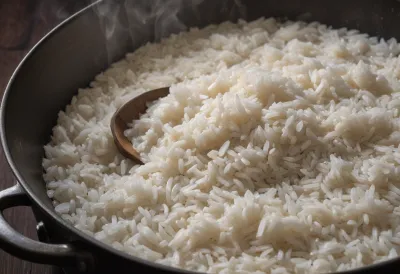
Raw vs cooked: which weight should you log?
A cup of dry rice becomes a mound of cooked; a chicken breast shrinks. The calories never moved — but log the wrong weight and you can be off by half.

How to read a nutrition label like a pro
Only 11.8% of adults could read the calories off a bottle labeled per serving. The panel holds three reference points, and not one of them is you.
When to recalculate your calories as you shrink
A calorie target doesn't fail on a particular Tuesday. It erodes from the day you set it — and you can work out from your own numbers when a quarter is gone.

Refeed days: strategic overeating, explained
One trial ever isolated the refeed. It reported three wins, a reanalysis left one standing, and the hormone story collapsed inside the trial itself.

Resistant starch: the carb that acts like fiber
Cooling last night's pasta cut the glucose curve by 60% and the calorie bill by roughly twenty. Same trick, two wildly different sizes of payoff.
Reverse dieting: can you 'rebuild' your metabolism?
A bodybuilding protocol with no controlled trial behind it — until one randomized arm finally ramped calories back slowly, and finished heaviest of the three.
Saturated vs unsaturated fat: what the science says
The 'saturated fat is deadly' story genuinely cracked after 2020 — but not the way the internet thinks. The real question isn't the fat; it's what replaces it.

Set point theory: does your body fight weight loss?
Two withdrawal trials of the same drug asked whether the body steers back to a target weight. One said yes, one said no. That gap is the live dispute.
Shift work, circadian disruption, and weight
Shift workers carry more weight without reliably eating more of anything. Fewer than 3% ever adapt to nights — so the lever that's left is your 3am.

Why tired dieters quit sooner
The strongest predictor of whether a diet works isn't the diet — it's how long you stick with it. And sleep is one of the best-measured inputs to that.

The link between poor sleep and emotional eating
Sleep loss doesn't mainly make you sad. It flattens the day's ordinary pleasures — and food is the one pleasure still cheap, fast, and within reach.
How sleep loss tanks your workouts
You can still hit your numbers on four hours' sleep. That's the trap — the bar moves up to 15% slower, feels 11% harder, and your training log shows none of it.
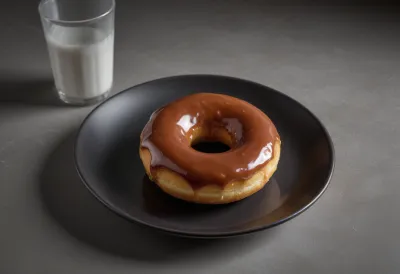
How tired brains find junk food more rewarding
Sleep-deprived men paid more for snacks but not for trinkets, and their hunger ratings never budged. The wanting is real — it just isn't hunger.

Growth hormone, deep sleep, and body composition
Give adults extra growth hormone and lean mass rises 2.1 kg while strength stays flat. That result caps what protecting your nightly pulse can buy.

How one bad night hurts insulin sensitivity
One night of short sleep and the same breakfast lands harder: glucose disposal drops ~20% by morning. What recovers by the weekend, and what doesn't.

Sleep's effect on thyroid and metabolic hormones
One sleepless night pushes TSH up. Six short nights push it down. The studies aren't in conflict — the timescale is the whole finding.

Poor sleep and next-morning water weight
The standard explanation has the physiology backwards. Deprive healthy adults of a night's sleep and their kidneys dump sodium and water — they don't hoard it.

Could sleep be your missing plateau fix?
It's the rare lever whose measured effect is the size of the gap that closed your deficit — but only for one kind of person, at a dose few reach.

How sleep loss weakens food willpower
"I have no willpower" is the wrong diagnosis twice: the fuel-tank model behind it barely replicated, and what sleep dims is the brain's control hardware.
Sleep quality vs quantity for weight control
Cut deep sleep by 88% without shortening the night at all, and insulin sensitivity still fell about a quarter. Quality and quantity are two dials, not one.

How sleep loss raises the hunger hormone ghrelin
The quotable hunger-hormone numbers came from all-nighters in men-only labs. Pool every trial since and ghrelin barely twitches. Why they split is the story.

Slow cut vs aggressive cut: which wins long-term?
Pooled trials favour the slow cut. An 18-month program favoured the fast one. The two measure different things, and the difference decides your plan.

Is snacking sabotaging you — or helping?
A snack isn't a special fattening food — but it's the easiest calorie to add without noticing. The fix isn't cutting snacks; it's two things about them.
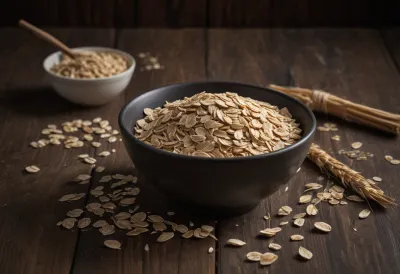
Soluble vs insoluble fiber, and why both count
Grinding wheat bran finer flips it from a laxative to a constipating agent. Same fiber, same solubility — which is a clue the textbook split is the wrong axis.

How many steps a day actually help weight loss?
The 10,000 target is a 1965 pedometer sales figure, not a health law. For weight, steps are a modest lever — and your own baseline beats any round number.

How stress stalls fat loss (via cortisol)
Stress splits people almost down the middle — 42% eat more, nearly half eat less. A single hormone can't do both, which tells you where to actually look.

Sugar vs added sugar: reading the label right
A glass of orange juice shows 0 g of added sugar on a US label and counts fully against the WHO limit. The label answers a factory question, not a health one.

Why your calorie needs drop as you lose weight
The deficit didn't stop working. It shrank along with you — and the appetite pushing back against it rose three times faster than the burn fell.

How calorie needs change during pregnancy
Nothing extra in the first trimester, then +340 and +452. Measured directly, half of women needed less — and the spread beat the average.

Why TDEE differs for women and men
The "slower female metabolism" got called a myth in a 1982 journal paper. Then a 450-person study adjusted for lean mass and the sex gap flipped direction.
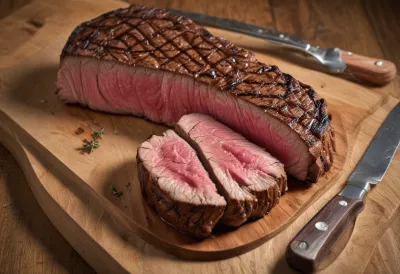
The thermic effect of food: calories burned digesting
Everyone quotes one tidy figure for what digestion costs. It comes from a four-hour reading of a six-hour event — and repeated in one person it moves 27%.

How your thyroid controls your metabolism
Correct a badly underactive thyroid and 4 kg leave in a year — with fat mass unchanged. The gland that sets your burn moves the scale in ways it hides.

Time-restricted eating: benefits beyond weight loss
Eight men ate on an early schedule for five weeks and were forbidden to lose a gram — their blood pressure fell anyway. Then a bigger trial found nothing.
How to track calories at a buffet or shared table
A smaller plate will not save you — a pre-registered trial put the difference at 19 calories. What moves a buffet is the variety, and who you came with.

How to track calories without obsessing over them
The same app, two opposite findings, and a screening scale that scores label-reading as pathology. What separates useful tracking from the harmful kind.

Why people underreport what they eat
A feeding lab weighed what 59 adults actually ate without telling them. The gap that followed wasn't one error — it was two, and only one is a logging failure.

Logging meals by voice: does it lose accuracy?
The microphone was never the hard part. A voice app can transcribe 'a bowl of pasta' flawlessly and still not know if you ate 300 calories or 600.
Do you burn more calories walking or running a mile?
The folk rule says a mile is a mile on foot. Two lab datasets disagree by a factor of two — and the usual deflating correction is what widens the gap.

Can you catch up on sleep for your metabolism?
Given two full nights to sleep as long as they liked, adults recovered about 1.1 hours in total. Then Monday's insulin sensitivity fell anyway, in more tissues.

How weekends quietly undo your weekday deficit
Two loose days can't erase five tight ones — the calories aren't there. What they erase is the year, and Monday's scale exaggerates the damage.

Should you review your calories daily or weekly?
Measuring often and judging often are two different decisions, and the evidence pushes them in opposite directions. One of them is where most trackers go wrong.

Food scale vs measuring cups: which is more accurate?
One cup is a volume. Every calorie database is written in grams. The translation between the two fails for four foods out of five — and nobody feels it.

How often should you weigh yourself?
Daily weighing's reputation rests on studies that watched who chose it. The trial that assigned it found nothing. Here's what frequency actually buys.
How to manage hunger in a calorie deficit
Researchers removed 575 calories a day from people's food and their hunger ratings never moved. The best levers in a deficit don't work the way you'd expect.

Plateau or just water weight? How to tell
One week of good fat loss is about the size of one day of ordinary noise. That ratio is why most "plateaus" are invisible progress, not stalls.
Whey, casein, or plant protein: which and when?
Whey won the muscle-building measurement and lost the one that mattered. One 1997 experiment holds both results — and it explains every tub on the shelf.

Which organs burn the most calories?
Your kidneys burn 34 times faster than muscle and still finish fourth. Rate and bill are different questions — and the answer to both is fixed equipment.
Who should not try intermittent fasting
The standard warning list is mostly right and badly argued. One group's risk has a number attached — fasting doubled hypoglycemia even after doses were cut.
The 'whoosh effect': fat cells, water, and the scale
Bodybuilding folklore says emptied fat cells hold water and then release it in one go. Someone measured the water inside a fat cell. It runs the other way.

Why am I not losing weight in a deficit?
Almost never a broken metabolism. Usually you're not in the deficit you calculated — intake reads low, maintenance fell. Here's the order to check.

Why height and body size drive calorie burn
Twice the body is nowhere near twice the burn. The extra kilograms a larger frame carries are its cheapest tissue — and the priciest organ barely grows at all.

Why your metabolism isn't the same every day
Sealed in a metabolic chamber, a person's daily burn repeats to within 3%. Let them out and it swings 8% — and nothing metabolic changed on the way out.
Why every TDEE calculator is just an estimate
Your resting metabolism is remarkably steady — about 2% of its variation is within-person. The unreliable part is not your body. It is the map drawn of it.
Why the scale jumps 2 lbs overnight
It's water, glycogen and gut contents — never fat, which can't move that fast. Here's what swings the morning number, and why only the trend is a signal.

16:8 fasting: how it works and who it suits
Most of a 16-hour fast is spent asleep — which is why 16:8 is the gentlest on-ramp, and why the window only works if it actually shrinks what you eat.

What's a realistic margin of error for calorie counting?
Measured against doubly labeled water, one person's food log can miss the truth by +25% to −76%. Here's why the day's band still isn't bottomless.

Calories in common foods: an honest reference
A "medium" banana, a cup of rice, one chicken breast — each hides a range wide enough to blow a daily budget. The reference numbers, and the reasons they move.
Can you outrun a bad diet? The honest answer
You ate it in four minutes. Undoing it costs the better part of an hour on the road — and that's before your body starts quietly reclaiming the difference.

Cardio vs weights for fat loss: which burns more?
In the best head-to-head, one stripped more weight and the other kept the muscle. The twist: the choice matters less than the thing neither one is.
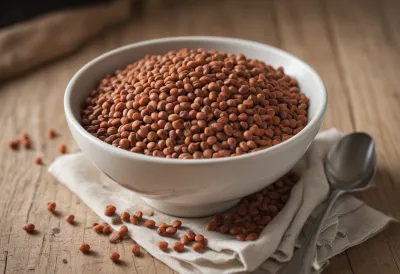
High-protein foods that are actually cheap
Lentils aren't 7x cheaper than chicken — not once you price protein instead of packs. Here's what a gram of protein really costs, and the budget foods that win.

7 calorie-tracking mistakes that quietly add up
Seven under-logging traps share one direction — down. Liquids, oils, weekends, and the 'healthy' halo do the quiet damage your total never sees.

Do you have to count calories to lose weight?
No — a landmark trial told 609 people to skip calorie counting entirely, and they lost weight anyway. But something still has to stand in for the arithmetic.
Is breakfast really the most important meal?
Randomly assign people to eat breakfast or skip it and the weight effect vanishes. The slogan outran the science — here's what breakfast actually does to you.
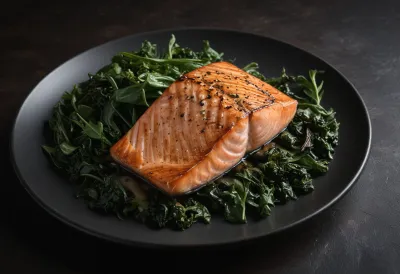
Does intermittent fasting actually beat regular dieting?
People lose real weight fasting — then the trials pit it against plain dieting and it ties every time. Both facts are true. Here's what that means for you.
Do you eat back the calories you burn?
The usual story is that exercise makes you ravenous. It mostly doesn't. What actually refills the deficit is a burn you overcounted by three to four times.

The case for a high-protein breakfast
Eggs and beef at breakfast quieted the brain's food-reward response before dinner. Strong on appetite, quieter on weight loss — here's where they split.

High-protein snacks that keep you full
The right afternoon snack pushes dinner later and lighter. The catch: 'high protein' has to mean ~20-25 g, and the hormone story is shakier than the effect.

How precise does calorie tracking actually need to be?
Weighing food to the gram feels rigorous. But your weight swings a pound a day on water alone, and responds over months — so the precision has nowhere to land.

How to find your true maintenance calories
A calculator hands you a population average with your name on it. Your maintenance is a number only your own scale can report — here's how to read it out.
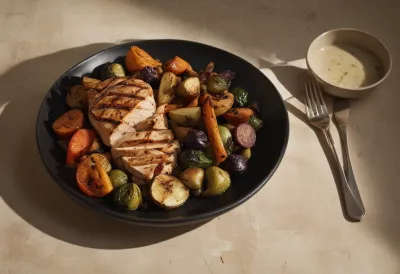
How to lose weight without counting every calorie
Spreadsheets aren't the only route. A handful of structural swaps can build the deficit for you — one trial got 5-6 kg with no calorie target at all.

How to keep the weight off after you lose it
Most advice stops at the finish line. But your biology lobbies to regain what you lost — so here's what the people who actually keep it off do differently.
How to start counting calories without burning out
Starting big is why calorie tracking burns out. The fix isn't discipline — it's one anchored meal a day, grown slowly, the way habits actually form.

Intermittent fasting: does when you eat matter?
Ketones, autophagy, a metabolism 'switch' — fasting's mystique is loud. The trials are quiet: the clock only works by helping you eat less. Here's the catch.

Intermittent fasting vs calorie counting: which is better?
Same deficit, opposite doors: one controls when you eat, the other how much. The winner isn't on the scale — it's whichever failure mode you can survive.

Fat loss vs weight loss: they're not the same
That 3 kg you dropped in week one wasn't fat — most of it was water. Here's how to read progress as a panel of signals instead of one morning number.

How to calculate your daily protein target
The '1 gram per pound' rule is really 2.2 g/kg — the ceiling, not the goal. Here's how to set a protein target from your weight, your goal, and the evidence.

How sleep controls your hunger hormones
Everyone repeats it: short sleep drops leptin, spikes ghrelin, and you overeat. The trouble is leptin won't hold still — and pooled trials lose the hormones.

Sleep and belly fat: is there a link?
Sleep loss and a bigger belly are genuinely linked — but the trial that proved it found something stranger: the fat went visceral, and recovery didn't undo it.

How much more you eat after a bad night's sleep
The famous “+300 calories” is an average hiding a wide distribution: one study's spread ran wider than its mean, and some people eat less, not more.

Sleep decides whether you lose fat or muscle
Cut sleep in a diet and the scale still moves — but a substrate shift spares your fat and bills the loss to muscle instead. The mechanism isn't cortisol.

Why sleep is when muscle actually rebuilds
The anabolic work is scheduled for the night: the main growth-hormone pulse rides on deep sleep, and a single bad night drops muscle protein synthesis 18%.

Is 'starvation mode' real?
Thirty-six men ate far too little for months and lost a quarter of their body weight. Whatever your metabolism does under a deficit, hoarding fat isn't it.

The daily habits that make weight loss stick
Diets are events; the weight comes back when they end. The behaviors that last are small, daily and automatic — habit research clocks it at about 66 days.

Why weight-loss plateaus happen (and how to break them)
The scale stops and the guilt starts. But a stall is usually three ordinary forces stacking up — and only one of them is your metabolism.

The best protein sources, ranked by quality
Whey scores below pork. Potato beats every bean. Gelatin scores 2. Protein quality is not the plant-versus-animal story you were sold — then it stops mattering.

BMR vs RMR: what's the difference and which to use
Everyone quotes a 10% gap between the two. We went looking for where that number came from — and the reviews that define the terms don't quantify it at all.

How to lose weight: the calorie deficit, explained
Cut 500 calories a day, lose a pound a week? The arithmetic is right and the schedule is fiction. Here is what actually happens to your weight, and when.

How many calories does walking actually burn?
Every "calories burned walking" table traces back to one research instrument — whose own authors say it was never built to tell you your calories.

Is a pound of fat really 3,500 calories?
The number is roughly right. The straight line drawn through it is not — and it is why your second week looks like a miracle and your sixth month like failure.

Does exercise burn as many calories as you think?
The console's number isn't simply too high — it's wrong in a direction you can't see. Then your body quietly reclaims a quarter of whatever was real.

Does your metabolism really slow with age?
The slowdown you felt at 38 wasn't your metabolism — it was doing exactly what it did at 25. Two other things changed instead, and both take instructions.

Does muscle really torch calories at rest?
The famous number is wrong by roughly an order of magnitude. What's stranger is that the training trials find more calories than the new tissue can explain.

Does poor sleep slow your metabolism?
Four studies seem to contradict each other on sleep and calorie burn. They don't — they measured different things, and that difference is the whole answer.
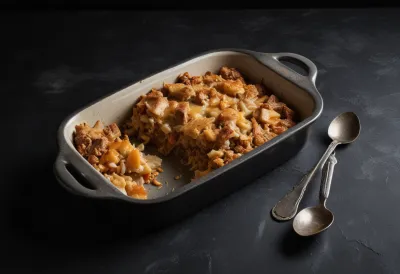
Why homemade meals are the hardest to count
A ribeye roast leaves the oven at 77% of the weight that went in. Your dinner changed mass while you cooked it — and the database entry you check against knows.

How to estimate calories in a restaurant meal
Two studies, 4,500 diners, one verdict: 15% of people get it right. The bias isn't ignorance — the restaurant's branding does part of your estimating for you.

Hand portions: estimating servings without measuring
Your fingers beat a measuring cup 80% to 29%. Your fist lost to it. The famous palm-fist-thumb system is built on the one part the data does not support.
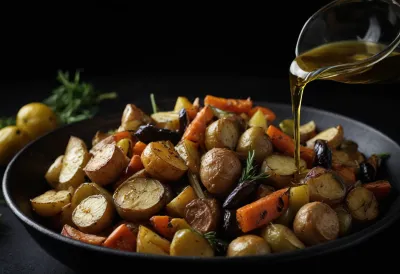
How accurate are AI photo calorie counters?
A photo records light bouncing off the top surface. Mass, density, and the oil it was fried in are underneath, inside, or dissolved — that is the whole problem.

How accurate are calorie-tracking apps?
The app's arithmetic is flawless. Everything feeding it is not — and at 9pm, mildly hungry, you are the one picking between six versions of the same food.

How accurate are fitness trackers' calorie counts?
Your watch counts steps well and reads your pulse well. The calorie number is a different kind of thing — and it is not wrong in a direction you can correct.
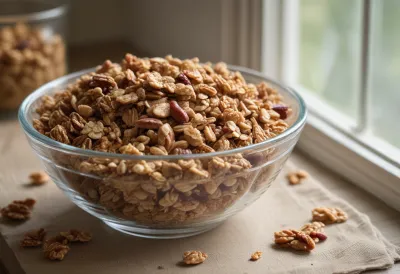
How accurate are nutrition labels, really?
The 20% a label may legally hide is the least of it. Rounding turns cooking spray into a zero, and the tolerance leans one way: toward the friendlier number.

How accurate are restaurant calorie counts?
The menu is most wrong exactly where you trust it most — and the salad you ordered for its number is the likeliest item on the page to beat it.
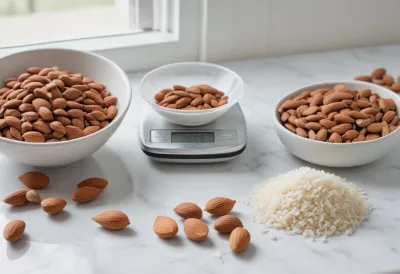
How accurate is calorie counting, really?
Four error layers stack between your plate and the confident total on your screen. Which one is actually worth fixing, and which are simply the terrain.

How big should your calorie deficit be?
Everyone treats 500 calories a day as the gentle default. Two independent lines of evidence say it is closer to the ceiling — and past it, muscle pays.
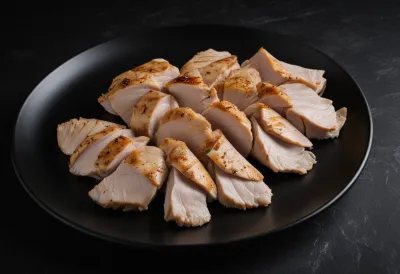
Can you eat too much protein?
There is a real ceiling on protein — but it is not your kidneys, and it isn't measured in grams. It's a share of your calories, and almost nobody gets near it.

How much protein do you actually need per day?
Nutrition's most-quoted number was never meant to be a goal — it is the dose that stops you getting sick. Here is the gap between that floor and your target.

How much protein to build muscle, by the research
Everyone quotes 1.6 g/kg as a law of nature. It is the midpoint of a confidence interval running 1.03 to 2.20 — and that width changes what the number is for.

How much sleep do you need to lose weight?
Everyone quotes "7 to 9 hours" — but that range fuses two organizations' numbers, and neither came from weight data. What the dose evidence actually shows.

How to calculate your TDEE, step by step
Every TDEE calculator runs the same two lines of arithmetic. The step they all skip is the one that turns a population's average into your number.

How to count calories: a complete beginner's guide
Fewer than half of trackers are still logging by week 10. The fix isn't discipline — it's deliberately lowering your standard for any single entry.
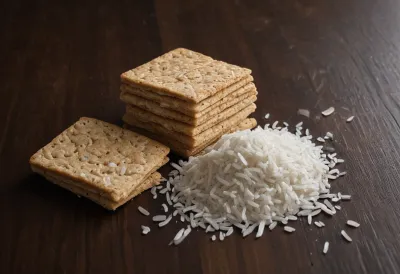
How to estimate calories without a food scale
Training cut portion errors from 92% to 66% — and wore off in a month. The trick isn't getting better at guessing; it's picking fights your eyes can win.
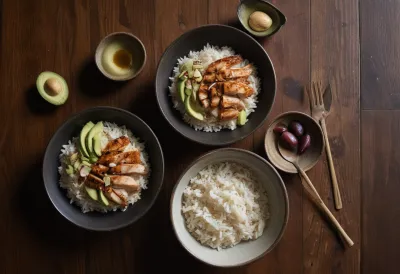
Macronutrients explained: protein, carbs, and fat
The 4/4/9 on every label is a 130-year-old estimate of what your body can extract — not what is in the food. Whole almonds miss the prediction by 32%.

Metabolism explained: what really drives calorie burn
Four organs weighing 3.3 kg between them do more of your resting burning than the 26 kg of muscle you train. Why "speeding it up" misdescribes the thing.
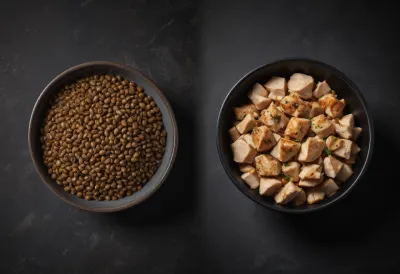
Plant vs animal protein: does the source matter?
Milk delivered 25% more leucine and 85% more lysine than a wheat-corn-pea blend. The muscle response was identical. Quality scores stop predicting outcomes.
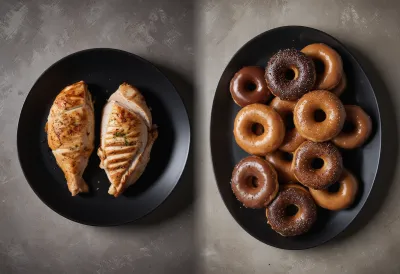
Why protein keeps you full longer
Hide the macros, feed people a protein-poor diet, and they eat 12% more without noticing. Protein's real trick isn't fullness at lunch — it's the total.

How much protein for fat loss (and why more helps)
Protein does not create the deficit and it won't melt fat. What it does, at identical calories, is decide whether the weight you lose comes off fat or muscle.

Is there a limit to protein absorbed per meal?
Feed someone 100 g of protein and track them for 12 hours instead of four, and the famous ceiling disappears — a property of the stopwatch, not the muscle.
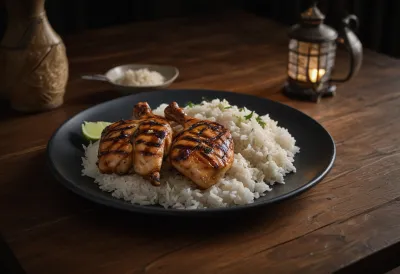
Protein timing: does the anabolic window exist?
The window is real. It is also about 24 hours wide. And every study that seems to prove timing beats total protein turns out to have quietly fed one group more.

What's a safe, sustainable rate of weight loss?
Fast dieting is not simply worse — in a 6,640-person study it worked better on the scale. It just charges a price, and researchers have counted it.

Why you crave junk food when you're tired
They'd already had breakfast. Their ghrelin was up and predicted nothing. Sleep-deprived men still bought 9% more calories — so the pull isn't hunger at all.

Sleep and weight loss: what the science says
Ten dieters, two sleep schedules, the same weight gone — but only half the fat. Why sleep is a real weight-loss lever, and why it doesn't work where you think.

How sleep loss drives weight gain
It isn't a slowed metabolism — it's a menu. Sleep loss hands you extra waking hours after 10pm, and what arrives in them quietly adds up over six weeks.

TDEE explained: how many calories you burn per day
The biggest slice of your daily burn is the one you control least, and the smallest is the one everybody counts. Why a four-digit TDEE is really a band.

Does your body count calories daily or weekly?
Closer to weekly — and a three-arm trial proves it by moving a week's calories around. But the day turns out not to be neutral about what you lose.

NEAT: the calorie burn you're ignoring
It's the largest lever in your energy budget, and almost nobody can pull it on purpose. Twenty people wearing sensors for ten days showed why.
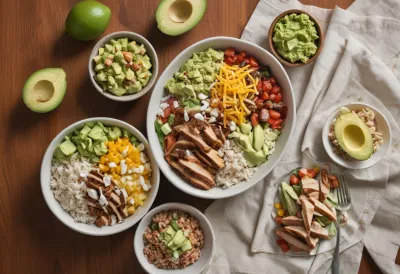
Why calorie counts are ranges, not single numbers
Fifty-three dietitians, one set of food records, the same software — and totals that refused to agree. A calorie estimate's width is the finding, not an excuse.
Why two apps give the same meal different calories
Six legal ways to compute one package. Fibre worth 2 calories in Dublin and 4 in Denver. When your app and your partner's disagree, you are often both right.