The night is mostly won during the day#
If you want sleep to work as a weight-loss habit, the useful news is that the moves with real evidence behind them are few, unglamorous, and mostly executed hours before you lie down. Cut caffeine by mid-afternoon, dim the lights in the last hour or two, cool your body down before bed, and keep your bed and wake times roughly fixed. That is close to the whole evidence-backed list, and none of it is a supplement or a gadget.
Why bother framing sleep as a weight lever at all? Because when habitual short sleepers were simply coached to sleep more, they ate about 270 fewer calories a day without trying — the dose evidence for that is in how much sleep you need to lose weight, and the broader case that sleep matters for fat loss is the pillar. This article is the practical layer under both: not whether to sleep more, but the specific, testable things that get you there. Each one below is a controlled finding, not folklore — and the biggest surprises are how far into the day the sabotage starts, and how little of it you actually feel.
| The move | What the evidence shows | What to do |
|---|---|---|
| Cut caffeine early | 400 mg even 6 h before bed cut measured sleep 1.1 h1 | Last real coffee by early afternoon |
| Dim evening light | Room light delayed melatonin in 99% of people2 | Lower the lights in the final 1–2 h |
| Cool the body | Warm bath 1–2 h before bed shortens sleep onset3 | Warm shower, then a cool bedroom |
| Keep timing regular | Consistency tracks metabolic health more than raw hours | See the schedule article below |
Caffeine reaches further into the night than you feel#
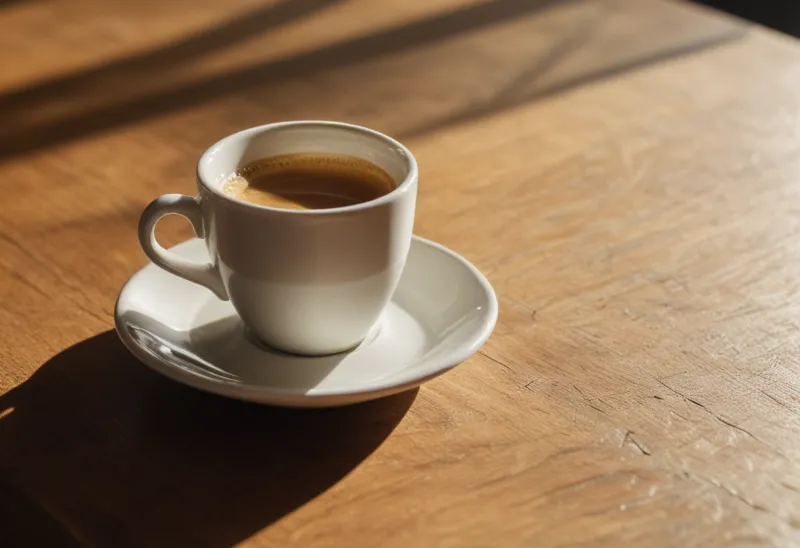
The single most actionable finding here is also the most counterintuitive. When 12 healthy adults took 400 mg of caffeine — roughly a large coffee, or three or four small ones — at bedtime, three hours before bed, or six hours before bed, every one of those timings significantly cut their sleep versus placebo. Even the dose taken a full six hours before bed reduced objectively measured total sleep by 1.1 hours1. Six hours is a 3pm coffee costing you an hour of a 9pm-to-morning sleep.
The part that should change your behaviour: the participants largely couldn't tell. Their subjective reports didn't flag the disruption the sleep monitor recorded. Caffeine has a half-life of roughly five hours, so a meaningful fraction of an afternoon dose is still circulating at midnight, quietly fragmenting sleep you experience as "fine."
A coffee six hours before bed cut measured sleep by an hour — and the drinkers didn't notice. The most disruptive thing about late caffeine is that it doesn't feel disruptive.
That's why "I sleep fine after coffee" is weak evidence: the study was built to catch exactly the gap between how your caffeinated sleep feels and how it measures. The practical rule the authors drew is the simple one — keep substantial caffeine at least six hours from bedtime, which for most people means the last real cup lands in the early afternoon.
Evening light tells your brain it's still daytime#
Your body times sleep partly by melatonin, the hormone that rises in the evening to signal night. Light suppresses it — and far less light than you'd guess. When 116 adults spent their pre-bed hours under ordinary room light (under ~200 lux) versus dim light, room light delayed the start of melatonin release in 99% of them and shortened the window of melatonin secretion by about 90 minutes; during the usual sleep hours, room light suppressed melatonin by more than half in most people2. Ordinary living-room brightness, not just screens, is enough to push your body clock later.
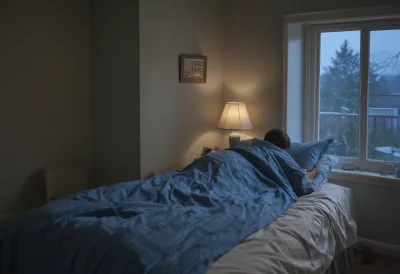
The move is not to sit in the dark. It is to treat the last hour or two before bed as dusk: lower the overhead lights, favour dim and warm lamps, and keep bright light off your face. The point of dimming isn't comfort — it's letting melatonin arrive on schedule so sleep onset doesn't slide later and shear an hour off the front of your night.
Warming up is how you cool down for sleep#
Sleep onset is coupled to a fall in your core body temperature, and there's a reliable way to help it along that sounds backwards: warm yourself first. Pooling controlled studies of before-bed bathing, a warm shower or bath of 40–42.5°C taken one to two hours before bed — for as little as ten minutes — significantly shortened the time it took to fall asleep and improved sleep quality and efficiency3. The mechanism is the trick: warming the skin sends blood to your hands and feet, which dumps heat and drops your core temperature faster once you're out — nudging the body into the thermal state that precedes sleep.
Two practical corollaries follow from the same physiology. Time it: a warm shower right as your head hits the pillow works against you; the benefit comes from the core-temperature drop that follows an hour or two later. And keep the bedroom cool, because the same fall in core temperature that a warm bath accelerates is one a hot room fights.
Regularity is the lever that outlasts any single trick#
All of the above buys you a better single night. What compounds is doing it on a schedule — going to bed and waking at roughly consistent times, so your body clock stops guessing. The evidence that regularity tracks weight and metabolic health more closely than raw hours do is a large enough story to have its own article: the best sleep schedule for weight management. The one-line version is that a steady rhythm makes every other tactic here easier, because a body that knows when night is coming produces melatonin, drops its temperature, and gets sleepy on cue.
Notice what isn't on this list: a specific supplement, a tracker, or a "sleep optimization" protocol. The controlled evidence keeps landing on cheap, boring inputs — light, temperature, caffeine timing, consistency — and the intervention that produced the 270-calorie eating drop was a single counseling conversation, not a device.
Why this earns a place next to the diet#
A better night is not a diet in disguise, and it won't out-run a persistent surplus. What it does is remove a tax you're paying without seeing it. Short sleep tilts the next day toward more eating, especially the afternoon-and-evening pull toward calorie-dense food, so protecting sleep quietly protects the eating side of the ledger — which is where the calories you'd otherwise have to fight actually live. Treat these moves the way you'd treat any sustainable habit worth keeping: pick the one that's clearly broken first — usually late caffeine or a bright, warm bedroom — fix that, and let the rest follow.
And track the sleep itself as a yes/no habit rather than a score to optimize. The value isn't in the number; it's in noticing which levers you're pulling and which you're not, the same way logging food surfaces patterns you'd otherwise miss. The best sleep-hygiene plan is the unremarkable one you'll actually run every night.
FAQ#
When should I stop drinking coffee to sleep better?#
At least six hours before bed, and ideally you'll notice you needed to stop earlier than you thought. In a controlled trial, 400 mg of caffeine taken six hours before bedtime still cut measured sleep by 1.1 hours — and participants didn't perceive the disruption1. For a typical bedtime that puts the last real coffee in the early afternoon, not after dinner.
Does light from screens and lamps before bed actually matter?#
Yes, and it's the room, not just the phone. Ordinary room light (under ~200 lux) in the hours before bed delayed melatonin onset in 99% of people and shortened melatonin's window by about 90 minutes2. Dimming the overhead lights in the last hour or two lets your body clock run on time.
Does a hot bath or shower before bed help you sleep?#
The evidence says yes, if you time it right. Pooled studies found a warm bath or shower (40–42.5°C) one to two hours before bed shortened the time to fall asleep and improved sleep quality3. The benefit is the core-temperature drop that follows, so leave an hour or two — a shower at lights-out doesn't do the same thing.
Sources#
- Drake C, Roehrs T, Shambroom J, Roth T. Caffeine effects on sleep taken 0, 3, or 6 hours before going to bed. J Clin Sleep Med. 2013;9(11):1195-1200.
- Gooley JJ, Chamberlain K, Smith KA, et al. Exposure to room light before bedtime suppresses melatonin onset and shortens melatonin duration in humans. J Clin Endocrinol Metab. 2011;96(3):E463-E472.
- Haghayegh S, Khoshnevis S, Smolensky MH, Diller KR, Castriotta RJ. Before-bedtime passive body heating by warm shower or bath to improve sleep: a systematic review and meta-analysis. Sleep Med Rev. 2019;46:124-135.
- Tasali E, Wroblewski K, Kahn E, Kilkus J, Schoeller DA. Effect of sleep extension on objectively assessed energy intake among adults with overweight in real-life settings: a randomized clinical trial. JAMA Intern Med. 2022;182(4):365-374.
Source: BurnWeek — "Practical ways to sleep better for weight loss", https://burnweek.fit/blog/improving-sleep-for-weight-loss/. Licensed CC BY 4.0: free to quote or reuse with a link to this page.