25 to 38 grams a day — and most people eat about half that#
If you want a fiber target, here it is: roughly 25 grams a day for women and 38 for men, the figure large cohort studies use as the "high intake" threshold and the level built into national guidelines2. The reason this article exists is the gap between that target and reality: the average American aged two and up eats about 16 grams of fiber a day, roughly half the recommendation4. Fiber is the most under-tracked number on the nutrition label — it is printed right there, it has almost no calorie cost, and almost nobody watches it.
Part of why it slips through is that fiber is not quite a macro. It is the fraction of carbohydrate your body can't digest, which is why the label lists it as a sub-line under total carbohydrate rather than as its own headline (macronutrients explained covers where it sits). But "can't digest" undersells it badly. Of all the numbers people chase in a diet, fiber has one of the strongest bodies of evidence behind it — and unlike most, the benefit keeps climbing the more you eat, up to a point. So this piece answers two things: how much to aim for, and why it is worth the bother.
The payoff is unusually large, and it scales with the dose#
Most single dietary changes buy you a modest, arguable benefit. Fiber is an exception, and the evidence is not thin. A 2019 series of systematic reviews and meta-analyses in The Lancet pooled 185 prospective studies — nearly 135 million person-years — plus 58 clinical trials, and found that the people eating the most fiber had a 15 to 30 percent lower rate of all-cause and cardiovascular mortality, coronary heart disease, stroke, type 2 diabetes, and colorectal cancer than those eating the least1. The dose-response mattered: risk fell furthest for people getting 25 to 29 grams a day, and the curves suggested more might help still. On the trial side, higher fiber intakes produced significantly lower bodyweight, systolic blood pressure, and total cholesterol.
That combination — consistent across huge observational datasets and supported by randomized trials, with a clean dose-response — is about as strong as nutrition epidemiology gets. It is the closest thing in this whole blog to a settled recommendation: eat more fiber, and if you are near the 16-gram average, you have a lot of room to move.
Which fiber, and why the gut story is messier than the benefit#
Here is where the certainty ends and the nuance starts, because "fiber" is not one substance. The benefits are robust; the mechanism people cite for them is only half right. The popular story is that fiber feeds gut bacteria, which ferment it into short-chain fatty acids that improve metabolism — so the more fermentable, viscous, "prebiotic" fiber, the better. The data don't fully cooperate. Reviewing the prospective evidence, Weickert and Pfeiffer found that the reduced risk of type 2 diabetes — a 20 to 30 percent drop for high versus low intakes — was driven mainly by whole grains and insoluble cereal fiber, the kind that is not very fermentable and does little to gut microbiota or the post-meal glucose response. Meanwhile the soluble, viscous, readily fermented fiber the mechanism predicts should win gives mixed results and generally doesn't lower diabetes risk2.
The moderator here is fiber type, and it points the opposite way from the marketing. Short-chain fatty acids are real and matter for colon health; they are simply not the whole explanation for fiber's metabolic payoff. The practical upshot is that the fiber with the best track record is the boring kind — whole grains, bran, the skins and structures of plants — not a viscous supplement in a tub. The soluble-versus-insoluble split is worth its own read, but the headline is: variety from whole foods beats optimizing a single fraction.
Does fiber actually fill you up?#
The other thing fiber is sold on is satiety — the idea that it "fills you up" so you eat less. This one is real but wildly oversold. A systematic review of acute studies catalogued 107 fiber treatments across 44 publications and found that only 39 percent significantly reduced appetite and just 22 percent significantly reduced how much people actually ate3. A few fibers — the β-glucan in oats and barley, and rye — showed the effect more than once; most did nothing measurable in the short term.
So fiber can help with hunger, but it is not a reliable appetite switch, and it is a weaker satiety lever than protein, whose effect is far more consistent (protein and satiety covers that). Eat fiber for the mortality and metabolic payoff, which is large and well-evidenced; treat the "keeps you full" bonus as occasional and fiber-specific, not a rule you can bank on.
How to actually hit 25 to 38 grams#
The distance from 16 grams to 30 is real but closeable, and it does not require supplements. Where the numbers stand:
| Fiber | |
|---|---|
| Recommended (women / men) | 25 g / 38 g |
| Average US adult actually eats | ~16 g |
| Intake linked to the greatest risk reduction | 25–29 g |
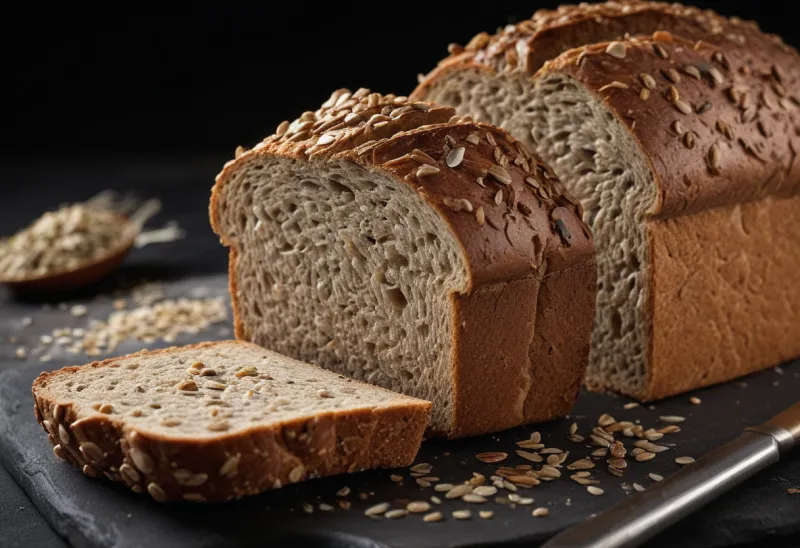
The gap closes fastest with a few high-fiber staples rather than a little more of everything: legumes (beans, lentils, chickpeas) are the densest common source, then whole grains (oats, barley, whole wheat, bran), then fruit and vegetables eaten with the skins on, then nuts and seeds. Swapping refined grains for whole ones and adding a daily serving of legumes moves most people from the low teens into the mid-20s without counting. Two cautions: raise it gradually over a couple of weeks, because a sudden jump ferments into gas and bloating, and drink enough water, since fiber works partly by holding it. That same shift is most of what separates a good carb from a refined one, and it is why a whole-food carbohydrate and a processed one behave so differently despite identical grams on a label (calories in common foods shows how far the same food can swing).
FAQ#
How much fiber should I eat per day?#
About 25 grams a day for women and 38 for men — the intake cohort studies treat as "high" and guidelines set as the target2. The average adult manages only around 16 grams4, so most people can nearly double their intake and still be within the recommendation. Risk reduction is greatest around 25–29 grams a day.
Does eating more fiber actually help you lose weight?#
A little, and indirectly. Trials show higher-fiber diets come with modestly lower bodyweight1, but fiber's effect on appetite is inconsistent — only about a fifth of fiber treatments measurably reduced food intake in controlled studies3. Fiber is worth eating for its health payoff; treat any weight effect as a small bonus, not the reason.
What's the easiest way to eat more fiber?#
Lean on a few dense sources rather than tweaking everything. A daily serving of legumes plus swapping refined grains for whole ones (oats, whole wheat, barley) closes most of the gap. Add the change slowly over a week or two to avoid bloating, and drink water. Whole foods beat fiber supplements, which target a single fraction rather than the variety the evidence favors.
Sources#
- Reynolds A, Mann J, Cummings J, et al. Carbohydrate quality and human health: a series of systematic reviews and meta-analyses. Lancet. 2019;393(10170):434-445.
- Weickert MO, Pfeiffer AFH. Impact of Dietary Fiber Consumption on Insulin Resistance and the Prevention of Type 2 Diabetes. J Nutr. 2018;148(1):7-12.
- Clark MJ, Slavin JL. The effect of fiber on satiety and food intake: a systematic review. J Am Coll Nutr. 2013;32(3):200-211.
- U.S. Department of Agriculture, Agricultural Research Service. Fiber intake of the U.S. population, What We Eat in America, NHANES 2009-2010. FSRG Dietary Data Brief, 2014.