"Incomplete" describes a ratio, not an absence#
A complete protein delivers all nine essential amino acids in proportions that meet a reference pattern. An incomplete one falls short on at least one, and that scarcest amino acid is called the limiting one — it caps how much of the rest your body can put to structural use, the way one short plank caps the height of a barrel. So far, so textbook. The part that gets left off is the rest of the sentence: incomplete proteins are not missing anything. Rice contains lysine. Wheat contains lysine. Whole plant foods carry all nine essentials; what differs is the distribution, and the distribution is skewed against the reference rather than punctured by it.
That single distinction decides everything that follows. If a grain genuinely lacked an amino acid, you would need a second food supplying it at the same sitting — which is precisely what the protein-combining advice of the 1970s assumed and why it specified meals rather than days. Because the shortfall is proportional instead of absolute, the correction can land anywhere inside a day, in a body that is already turning over several times more protein than it eats. The daily number you are filling is set in how much protein per day; this is about whether the amino acids inside it arrive in a usable shape.
The scorecard was built to grade a food, not a dinner#
Protein quality scores are per-food instruments by construction, and their own architects say so. Reviewing a decade of the Digestible Indispensable Amino Acid Score, Moughan and Lim state plainly that "DIAAS was designed to have a specific application to single protein sources," and warn that the values "are not necessarily additive" — if you want the quality of a meal, you have to go back to the underlying amino acids supplied by each food rather than averaging the scores1.
There is a giveaway buried in the scoring rules. The FAO tells you not to truncate a score above 100 — a protein that overshoots gets credit for the overshoot — except when you are calculating a score for a mixed diet or a sole-source food, where truncation returns. That exception only makes sense if surplus in one food is expected to cover deficit in another. The rulebook assumes complementation; it just does the assuming in a footnote.
And the underlying quantities do add up even though the scores don't: standardized ileal digestibility values for individual amino acids have been shown to be "broadly additive over a wide range of foods"1. Which is the technical version of a simple claim — your gut does not evaluate foods, it absorbs amino acids, and it does not care which plate they came off.
What complementation actually buys, measured#
The classic pairing is a cereal, short on lysine, with a pulse, short on sulfur amino acids. It is repeated constantly and quantified almost never. One study did the measurement, scoring individual cooked ingredients and then their blends against the FAO pattern for older children, adolescents and adults2.
| Food or blend | DIAAS | Limiting amino acid |
|---|---|---|
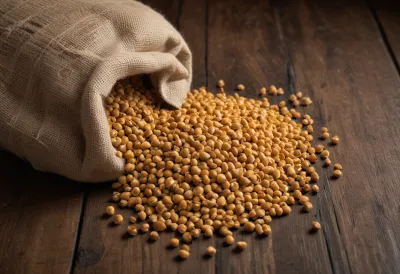
| Mung bean | 93 | Valine |
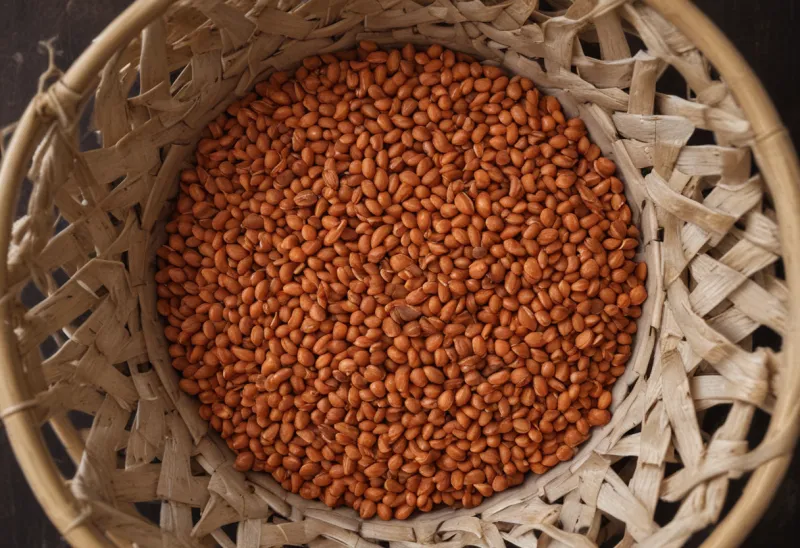
| Adzuki bean | 78 | Sulfur amino acids |
| Millet | 22 | Lysine |
| Adlay | 16 | Reactive lysine |
| Mung bean + millet (32:68) | 66 | Lysine |
| Adzuki bean + adlay (40:60) | 51 | Lysine |
Read the millet row against the blend row. A cereal scoring 22 — a genuinely poor protein, limited hard by lysine — becomes a 66 when a third of the protein comes from mung bean. Tripling a protein's usable quality by changing nothing except what sits beside it is a real effect with a real number on it.
Now read the same rows less charitably, because this is where the cheerful version of the story overreaches. Neither blend cleared 75, the threshold below which the FAO grants no quality claim at all, and both blends scored below the pulse eaten on its own. Complementation is arithmetic, not alchemy: mixing a 93 with a 22 gets you something in between, weighted by how much protein each side brings. It rescues the cereal. It does not manufacture quality that was not in the bowl. If the bulk of your protein comes from grains, a spoonful of beans will move the number less than the proportions in that table suggest, and the fix is to change the ratio rather than to add a token.
Why the day, not the meal, is the accounting period#
Here is the physiology the combining rule was written without, and it is the reason the rule died.
You are not a vessel that fills with dietary amino acids and empties. You are a construction site that demolishes and rebuilds continuously. In adult humans, whole-body protein turnover runs at about 5.7 g per kg per day against total protein synthesis of about 3.0 g/kg/day3. For a 70 kg adult that is roughly 400 grams of protein moving through the system daily — my arithmetic on their per-kg rate, not a figure they publish — against maybe 100 grams eaten. The overwhelming majority of the amino acids being incorporated into your tissues right now came from your own protein, dismantled and reissued, not from lunch.
Those amino acids sit in a genuine pool while they wait. The free amino acid pool in the muscle of a 70 kg man has been calculated at about 86.5 g excluding taurine3. It is not a protein warehouse — essential amino acids make up only 8.4% of that pool, with glutamine, glutamate and alanine accounting for nearly 79% — but it is a buffer, and a buffer is exactly what a meal-timing rule has to defeat before it can matter.
The buffering is also actively managed. Reviewing how the fat-free mass is regulated across the feeding-and-fasting cycle, Millward describes tissue protein as taking net losses while you fast and net gains while you feed, with the amplitude of that swing tuned by adaptive changes in amino acid oxidation — and observes that muscle mass in well-fed, weight-stable adults "appears fixed at a phenotypic level within a wide range of habitual protein intakes"4. A system whose output is stable across a wide range of inputs is not a system that notices which amino acid was scarce at 1 p.m.
Even the gut runs its own protein economy alongside yours. On a protein-free diet, endogenous ileal nitrogen flow was still measured at 800 mg N/day, rising to 1,852 mg N/day when protein was fed5 — the body's own secreted and shed proteins moving down the tract regardless of what you ordered. The amino acid stream your tissues see is a blend of the meal and the body long before it reaches them.
Where "incomplete" still bites#
The conclusion is not that amino acid composition is irrelevant. It is that composition is a property of a diet, and it stops being a property of a meal. Three situations put it back on the table.
A monotonous diet with one dominant staple. The Han blends make the point in reverse: when nearly all of your protein comes from a single cereal, there is no second food to weight the average, and a DIAAS in the teens or twenties is the number that describes you. This is a real problem in food systems built on one grain, and largely a hypothetical one in a varied diet.
A total protein intake near the floor. Complementation works by surplus covering deficit. Take away the surplus and there is nothing to redistribute — which is why the same reviewers who dismiss within-meal combining keep attaching the condition "in sufficient quantities." As one perspective in Advances in Nutrition puts it, "the amino acid composition of the overall diet will determine protein adequacy, whereas the food sources of those amino acids will determine diet quality"7. Worth noting the interests attached to a conclusion this convenient for plant-forward messaging: that paper's authors declare consulting and advisory relationships with KIND, the California Walnut Commission, Quaker Oats, Pulse Canada and others, and the work was supported through a contribution from KIND Snacks.
Fragments sold as protein. Collagen and gelatin are the genuine edge case — proteins by chemistry that score close to zero on amino acid completeness, because they are structurally short on tryptophan rather than merely light on it. The quality ranking puts numbers on that gap.
Everything else is variety doing its job. The Academy of Nutrition and Dietetics' current position is that appropriately planned vegetarian and vegan patterns are nutritionally adequate for adults6 — a claim that would be impossible if per-meal completeness were required. The practical build for hitting a target without animal foods, where the binding constraint turns out to be density rather than amino acids, is in protein for vegetarians and vegans, and what happens to muscle when you actually run the experiment is in plant vs animal protein. The nine essentials themselves, and why only protein has a list like that, are defined in macronutrients explained.
FAQ#
What makes a protein complete?#
Delivering all nine essential amino acids in proportions that meet a reference pattern, after accounting for how much of each you actually digest. The word is misleading because it implies presence or absence: an "incomplete" plant protein still contains every essential amino acid, it just carries one of them in a ratio below the reference — usually lysine in cereals and the sulfur amino acids in pulses. Scoring systems like DIAAS were built to grade single protein sources, not diets1.
Is rice and beans really a complete protein?#
The pairing works, and the size of the effect depends entirely on the ratio. In measured cooked blends, millet alone scored 22 on DIAAS and mung bean alone 93; a blend of 32% mung bean and 68% millet scored 662. That is a threefold improvement on the cereal and still short of the FAO's 75-point threshold for a quality claim — so treat cereal-plus-pulse as a large upgrade rather than a guaranteed pass, and give the pulse a meaningful share of the plate.
Does your body store amino acids between meals?#
Not as a dedicated reserve, but there is enough of a buffer to make meal-by-meal balancing unnecessary. The free amino acid pool in the muscle of a 70 kg man is roughly 86.5 g, though essential amino acids are only 8.4% of it3. The larger buffer is turnover itself: body protein is continuously broken down and resynthesized, with tissue protein taking net losses while fasting and net gains while feeding4.
Sources#
- Moughan PJ, Lim WXJ. Digestible indispensable amino acid score (DIAAS): 10 years on. Front Nutr. 2024;11:1389719.
- Han F, Moughan PJ, Li J, Stroebinger N, Pang S. The Complementarity of Amino Acids in Cooked Pulse/Cereal Blends and Effects on DIAAS. Plants (Basel). 2021;10(10):1999.
- Poortmans JR, Carpentier A, Pereira-Lancha LO, Lancha A Jr. Protein turnover, amino acid requirements and recommendations for athletes and active populations. Braz J Med Biol Res. 2012;45(10):875-890.
- Millward DJ. Post-prandial tracer studies of protein and amino acid utilisation: what can they tell us about human amino acid and protein requirements? Br J Nutr. 2024;131(12):2005-2030.
- Moughan PJ, Rutherfurd SM. Gut luminal endogenous protein: implications for the determination of ileal amino acid digestibility in humans. Br J Nutr. 2012;108 Suppl 2:S258-S263.
- Raj S, Guest NS, Landry MJ, Mangels AR, Pawlak R, Rozga M. Vegetarian Dietary Patterns for Adults: A Position Paper of the Academy of Nutrition and Dietetics. J Acad Nutr Diet. 2025;125(6):831-846.e2.
- Katz DL, Doughty KN, Geagan K, Jenkins DA, Gardner CD. Perspective: The Public Health Case for Modernizing the Definition of Protein Quality. Adv Nutr. 2019;10(5):755-764. (Authors declare food-industry consulting and advisory relationships; supported through a contribution from KIND Snacks.)
Source: BurnWeek — "Complete vs incomplete proteins, explained simply", https://burnweek.fit/blog/complete-vs-incomplete-proteins/. Licensed CC BY 4.0: free to quote or reuse with a link to this page.