Replacing saturated fat with the right fat lowers heart risk — the rest is contested#
The one thing most experts still agree on is narrow but solid: swapping saturated fat for polyunsaturated fat lowers the risk of heart disease, and that result has held up across decades of randomized trials1. What has genuinely come apart since about 2020 is the stronger, older claim — that saturated fat is harmful in itself, so that cheese and a steak belong in the same bin as soda and shortening. That claim is now disputed by serious researchers, and the disagreement is real rather than manufactured.
So the useful frame is not "saturated bad, unsaturated good." It is this: unsaturated fats — especially the polyunsaturated fats in vegetable oils, nuts, seeds, and fish — are the ones with the strongest evidence for them, while the case against saturated fat depends heavily on two things the old advice ignored: what you replace it with, and which food it came from. This article is about the type of fat; the basics of fat as a macro live in macronutrients explained, and how much total fat to eat is worked out separately in how much dietary fat per day.
The chemistry, and the cholesterol question that started the fight#
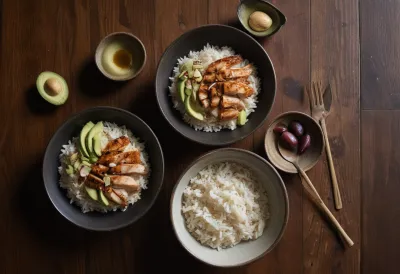
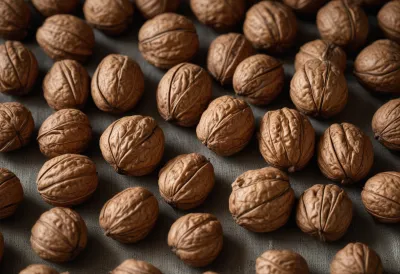
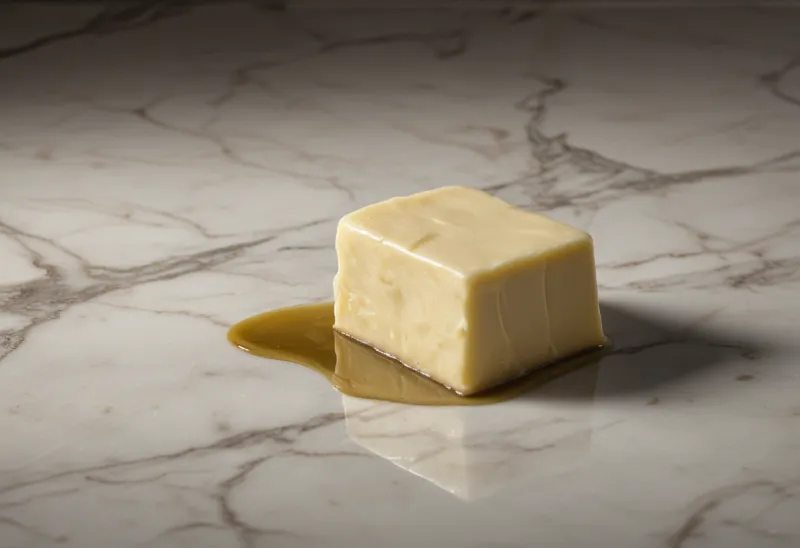
The difference is structural. Saturated fatty acids have no double bonds in their carbon chain, which lets them pack tightly and stay solid at room temperature — butter, the fat marbling a steak, coconut and palm oil. Unsaturated fats have one double bond (monounsaturated: olive oil, avocado) or several (polyunsaturated: sunflower and soybean oil, walnuts, oily fish), kinks that keep them liquid. Those are just shapes; the health argument is about what they do downstream.
The classic case against saturated fat runs through cholesterol: saturated fat raises LDL cholesterol, LDL drives atherosclerosis, therefore saturated fat drives heart disease. Every link there is real, but the middle one is looser than it sounds. Saturated fat raises LDL largely by increasing large LDL particles, which are less strongly tied to cardiovascular risk than the small, dense ones — one reason the reassessment camp argues the LDL-to-outcomes step doesn't carry as much weight for saturated fat as the textbook chain implies2. That is a genuine mechanistic dispute, not a rhetorical one.
The old dogma, and where it cracked#
The strong pro-limit case is not weak, and it deserves stating at full strength. In its 2017 presidential advisory, the American Heart Association pooled the randomized trials that replaced saturated fat with polyunsaturated vegetable oil and found they cut cardiovascular disease by about 30% — a reduction the advisory compared to statin therapy1. Replace saturated fat with polyunsaturated fat, and the heart benefits. That is the settled core.
The cracks are in the blanket version. The PURE study followed more than 135,000 people across 18 countries and found that higher saturated fat intake was associated with lower total mortality, not higher, with no link to heart attacks or cardiovascular death — higher saturated fat even tracked with slightly less stroke3. It is observational, so it can't prove causation and carries the usual confounding, but it is large and global, and it does not fit a story in which saturated fat is uniformly deadly. Alongside it, the 2020 JACC reassessment argued that recent meta-analyses found no clear benefit from simply reducing saturated fat, and that whole-food sources — whole-fat dairy, unprocessed meat, dark chocolate — carry a food matrix not associated with higher cardiovascular risk2. The question the two camps are actually fighting over is precise: does saturated fat raise risk on its own, regardless of what replaces it and what food carries it? The AHA says effectively yes; the reassessment says not clearly.
The disagreement is real — and the moderator is what you replace it with#
Here is what mostly reconciles the split, and it is the single most useful thing to take away. When you cut saturated fat, you have to put something in its place, and that something decides the outcome. A large prospective analysis quantified it directly: replacing 5% of energy from saturated fat with polyunsaturated fat was associated with a 25% lower risk of coronary heart disease, with monounsaturated fat 15% lower and whole-grain carbohydrate 9% lower — but replacing it with refined starch or added sugar was not associated with any benefit at all4.
That result explains the whole muddle. For decades, "cut the fat" advice was followed by replacing it with refined carbohydrate — low-fat products loaded with sugar — which the data say does nothing for your heart. So trials and cohorts that lowered saturated fat without controlling the replacement found weak or absent benefits, feeding the reassessment. It was never that saturated fat is harmless; it is that swapping it for refined carbs is pointless, while swapping it for polyunsaturated fat helps.
The question was never really "is saturated fat bad?" It is "bad compared with what?" Trade it for polyunsaturated fat and your heart benefits; trade it for sugar and you have gained nothing.
The remaining uncertainty is that even this is not fully nailed down. The most recent Cochrane review confirmed that reducing saturated fat cut cardiovascular events by about 21%, but its subgroup analysis could not statistically separate replacing those calories with polyunsaturated fat from replacing them with carbohydrate — the trial data are simply too thin to settle the replacement question with certainty5. The direction is clear; the last decimal is not.
Follow the funding — in both directions#
Because this is contested and money sits close to it, the disclosures matter, and they cut both ways. The 2020 reassessment that defends saturated fat is a case where the caveat belongs right next to the finding: its authors include researchers funded by the dairy industry — the lead author reports research support from the Danish Dairy Foundation, Arla Foods, and the European Milk Foundation, and the expert workshop the paper grew out of was funded by the Nutrition Coalition, a nonprofit that argues official saturated-fat limits should be revisited2. None of that makes the food-matrix argument wrong, but it is worth knowing when the paper is cited as proof that saturated fat is fine.
The same scrutiny applies to the other side. PREDIMED, the flagship trial showing a Mediterranean diet rich in olive oil and nuts cut major cardiovascular events by about 30% versus a low-fat diet, is not a spotless hero either: its 2013 publication was retracted in 2018 over randomization errors, then republished the same year with corrected analyses that left the ~30% benefit essentially intact6. The lesson is not that either side is bought; it is that the evidence keeps converging on the same modest, practical conclusion despite the interests pulling on it.
What to favor, what to fear, what to skip#
Strip out the noise and the guidance is unglamorous:
- Make unsaturated fats your default fats. Olive oil, nuts, seeds, avocado, and oily fish have the strongest evidence in their favor — which is also where the omega-3 and essential fatty acid story lives.
- You don't need to fear whole-food saturated fat. Cheese, yogurt, eggs, and unprocessed meat in normal amounts are not the villains the old advice made them; the food matrix matters, and the harm signal is strongest for processed sources.
- Never replace fat with refined carbs. The one move the evidence clearly calls a mistake is trading fat for sugar and white flour, which loops straight back into good carbs vs bad carbs.
- Remember it is animal-versus-plant as much as saturated-versus-unsaturated. Most saturated fat rides in on animal foods and most unsaturated on plants and fish, an overlap explored in plant vs animal protein.
The type of fat matters — but through a subtler mechanism than the one you were taught, and less than the overall processing quality of your diet. Fat is also the macro where portion errors cost the most calories, at 9 per gram, so how much oil goes in the pan can swing a meal more than which oil it is (calories in common foods).
FAQ#
Is saturated fat actually bad for you?#
It is contested, and the answer depends on the comparison. Replacing saturated fat with polyunsaturated fat lowers heart-disease risk in randomized trials1, but large cohort data from the PURE study found higher saturated fat intake tracked with lower mortality, not higher3. The reconciling factor is what you replace it with: swap it for unsaturated fat and you benefit; swap it for refined carbs and you don't.
Which is healthier, butter or olive oil?#
Olive oil, by the evidence. It is mostly monounsaturated fat, and substitution studies link replacing saturated fat (like butter) with unsaturated fat (like olive oil) to lower heart-disease risk4. That does not make butter poison — modest amounts of whole-food saturated fat are not the danger they were once portrayed as — but if you are choosing a default cooking fat, olive oil has the stronger case.
Should I worry about the omega-6 to omega-3 ratio?#
Less than the internet suggests. Both are essential polyunsaturated fats, and the practical priority is getting enough omega-3 (from oily fish, walnuts, flax) rather than obsessing over a ratio, since most people simply eat too little omega-3 in absolute terms. The essential fatty acids piece goes deeper.
Sources#
- Sacks FM, Lichtenstein AH, Wu JHY, et al. Dietary Fats and Cardiovascular Disease: A Presidential Advisory From the American Heart Association. Circulation. 2017;136(3):e1-e23.
- Astrup A, Magkos F, Bier DM, et al. Saturated Fats and Health: A Reassessment and Proposal for Food-Based Recommendations: JACC State-of-the-Art Review. J Am Coll Cardiol. 2020;76(7):844-857.
- Dehghan M, Mente A, Zhang X, et al. Associations of fats and carbohydrate intake with cardiovascular disease and mortality in 18 countries (PURE): a prospective cohort study. Lancet. 2017;390(10107):2050-2062.
- Li Y, Hruby A, Bernstein AM, et al. Saturated Fats Compared With Unsaturated Fats and Sources of Carbohydrates in Relation to Risk of Coronary Heart Disease. J Am Coll Cardiol. 2015;66(14):1538-1548.
- Hooper L, Martin N, Jimoh OF, et al. Reduction in saturated fat intake for cardiovascular disease. Cochrane Database Syst Rev. 2020;5(5):CD011737.
- Estruch R, Ros E, Salas-Salvadó J, et al. Primary Prevention of Cardiovascular Disease with a Mediterranean Diet Supplemented with Extra-Virgin Olive Oil or Nuts. N Engl J Med. 2018;378(25):e34.
Source: BurnWeek — "Saturated vs unsaturated fat: what the science says", https://burnweek.fit/blog/saturated-vs-unsaturated-fat/. Licensed CC BY 4.0: free to quote or reuse with a link to this page.