A 120 g day needs about a quarter of its calories from protein#
Getting 100 to 140 g of protein as a vegetarian or vegan comes down to three moves: build each meal around a food that delivers at least 10 g of protein per 100 calories, eat a portion of it that carries 30 g, and use one scoop of isolate when the calorie budget is tight. Do that at three meals plus one snack and the day lands near 120 to 130 g on roughly 1,800 to 2,000 calories. Skip it, and the same target would cost you well over 3,000.
That last number is not rhetoric. A systematic review of 141 studies, 64 of which reported protein, found average intakes of 13.4% of energy in vegetarians and 12.9% in vegans, against 16.0% in meat-eaters1. Those averages sit comfortably above the minimum requirement, but 120 g of protein is 480 calories, and at 12.9% of energy that takes a 3,700-calorie day. A separate review of 48 European studies reached the same ordering: vegan diets ran lower in protein than every other diet type2. One disclosure: both authors of the larger review work for Unilever, which sells fortified foods and supplements.
Why plant diets drift low, and whether plant eaters need a higher target at all, is covered in hitting your protein target on a plant-based diet. This piece is the menu: which foods, how much of each, and what a full day looks like. If you haven't set a number yet, start with how much protein per day.
The ranked shortlist: protein per 100 calories#
Most lists rank protein per 100 g of food, which makes peanut butter look as good as tempeh. Inside a calorie budget, the number that matters is protein per 100 calories.
The ranking sorts into four tiers:
- Concentrates (20 g or more per 100 kcal). Soy protein isolate, vital wheat gluten (the dry base of seitan) and, for vegetarians, egg white. Nothing else on the list comes close.
- Dairy (about 17 g). Nonfat Greek yogurt and 1% cottage cheese. For vegetarians these are the easiest anchors, because a normal bowl of either delivers 20 to 30 g.
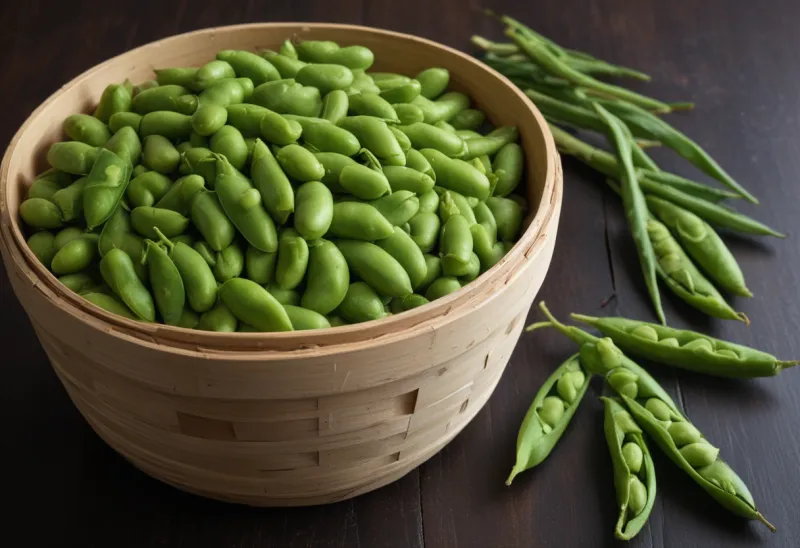
- Whole soy (10 to 12 g). Firm tofu and tempeh clear the anchor line; edamame sits just under it at 9.8 g. Whole eggs and unsweetened soy milk land near 9 g.
- Legumes, grains and seeds (under 8 g). Lentils, beans and chickpeas are fine food, but they work as protein helpers, not anchors. Quinoa's reputation as a protein food doesn't survive the arithmetic: 3.7 g per 100 calories, the same as peanut butter.
Peanut butter is the cautionary entry. It has 22 g of protein per 100 g, which is why it shows up on protein lists, but 598 kcal per 100 g. Getting 30 g of protein from it costs about 810 calories.
| Food | Protein /100 g | kcal /100 g | g per 100 kcal | For 30 g protein |
|---|---|---|---|---|
| Soy isolate | 88.3 | 335 | 26.4 | 34 g, 114 kcal |
| Wheat gluten | 75.2 | 370 | 20.3 | 40 g, 148 kcal |
| Egg white | 10.9 | 52 | 21.0 | 275 g, 143 kcal |
| Greek yogurt | 10.2 | 59 | 17.3 | 294 g, 174 kcal |
| Cottage cheese | 12.4 | 72 | 17.2 | 242 g, 174 kcal |
| Tofu, firm | 17.3 | 144 | 12.0 | 173 g, 250 kcal |
| Tempeh | 20.3 | 192 | 10.6 | 148 g, 284 kcal |
| Edamame | 11.9 | 121 | 9.8 | 252 g, 305 kcal |
| Lentils | 9.0 | 116 | 7.8 | 333 g, 386 kcal |
| Peanut butter | 22.2 | 598 | 3.7 | 135 g, 808 kcal |
The first three columns are USDA values; the last two are our division. Cooked values are for cooked food, so lentil and bean weights are as eaten.
Portion size is the second filter#
Density tells you what a food costs in calories. It doesn't tell you whether you can eat enough of it. Thirty grams of protein from soy milk takes about a liter; from quinoa, about 680 g of cooked grain. Possible, and rare.
The top-left corner is where the useful anchors live. Seitan and soy isolate win on both axes, which is why they show up in nearly every high-protein vegan plan. Tofu and tempeh need around 150 to 175 g, an ordinary portion. Yogurt, cottage cheese and egg white need more weight, but most of that weight is water, so the bowl is big and the calories are small. Lentils need a third of a kilo cooked for 30 g, which is why they work best stacked with a denser anchor rather than alone.
Per-meal size matters for a second reason. Muscle protein synthesis responds to the leucine in a meal, and many plant proteins carry less of it per gram than dairy does; how much that matters is in leucine and muscle protein synthesis. The practical fix is the same either way: a 30 g anchor per meal, not 10 g sprinkled across five.
Two sample days at about 1,840 calories#
Both days were built from USDA records and land within a calorie of each other. Swap foods freely; keep the structure.
Vegetarian day: 1,844 kcal, 129 g protein (28% of energy)
| Meal | What's on it | kcal | Protein |
|---|---|---|---|
| Breakfast | 200 g nonfat Greek yogurt, 60 g oats, 100 g blueberries, 16 g peanut butter | 498 | 33 g |
| Lunch | 2 eggs plus 100 g egg whites with spinach, 2 slices whole-wheat bread, 5 g olive oil | 414 | 33 g |
| Snack | 150 g 1% cottage cheese, a banana | 213 | 20 g |
| Dinner | 200 g firm tofu, 200 g cooked brown rice, 150 g broccoli, 15 g olive oil | 719 | 44 g |
Vegan day: 1,843 kcal, 133 g protein (29% of energy)
| Meal | What's on it | kcal | Protein |
|---|---|---|---|
| Breakfast | 60 g oats cooked in 300 ml unsweetened soy milk, 20 g soy isolate stirred in, 100 g blueberries | 450 | 35 g |
| Lunch | 125 g tempeh, 150 g cooked quinoa, 100 g red pepper, 10 g olive oil | 534 | 33 g |
| Snack | 155 g edamame, a banana | 293 | 20 g |
| Dinner | Seitan from 30 g vital wheat gluten, 150 g cooked lentils, 120 g cooked whole-wheat pasta, spinach, 10 g olive oil | 566 | 45 g |
Three things make these days work. Every main meal has one anchor from above the 10 g line. The low-density foods (oats, quinoa, lentils, pasta) are present, but as the carbohydrate side, adding protein rather than carrying it. And the fat is deliberate and visible: 20 g of olive oil in the vegan day, 36 g of oil and peanut butter in the vegetarian one, about 180 to 270 calories that you can see and trim.
The vegetarian day reaches its target without any powder. The vegan day uses 20 g of isolate, about 70 calories, for 18 g of protein. Without it, the day still reaches about 115 g.
Where protein powder fits#
Soy isolate tops the density chart at 26 g per 100 calories, which makes it a calorie tool more than a convenience. The muscle evidence says it does the job: in a 12-week training trial, habitual vegans who used soy isolate to reach 1.6 g/kg gained the same muscle and strength as omnivores using whey, a result discussed in plant vs animal protein3.
A controlled feeding study shows the calorie side of the trade. Nineteen older adults ate a 1.8 g/kg diet for three days, either mostly animal protein or fully vegan, with mycoprotein providing 57% of the vegan group's protein. Daily muscle protein synthesis did not differ between groups. But look at the bedtime supplement each group drank: 31 g of protein from milk protein came in 131 kcal, and the same 31 g from mycoprotein came in 232 kcal4. Matching protein with whole plant foods worked, and it cost about 100 extra calories per serving. The study was sponsored by Marlow Foods, which makes mycoprotein products, and with 19 people over three days it speaks to feasibility, not long-term outcomes.
If your calories are generous, whole foods get you there and powder is optional. If you are in a deficit, one serving of isolate is the cheapest 20 g in your day, measured in calories. Which powder to buy is a separate question, answered in whey vs casein vs plant protein.
FAQ#
What is the highest-protein vegan food per calorie?#
Soy protein isolate, at about 26 g of protein per 100 calories in USDA data, followed by vital wheat gluten (the base of seitan) at about 20 g. Among unprocessed whole foods, firm tofu leads at about 12 g, with tempeh close behind at 10.6 g.
Can vegetarians reach 120 g of protein without protein powder?#
Yes. Built from nonfat Greek yogurt, eggs and egg whites, cottage cheese and tofu, the sample day above reaches 129 g on about 1,840 calories with no powder. The dairy and egg-white anchors do most of the work, at about 17 to 21 g of protein per 100 calories.
Is peanut butter a good protein source for vegans?#
Not as an anchor. It has 22 g of protein per 100 g, but about 600 calories, which works out to 3.7 g of protein per 100 calories. Thirty grams of protein from peanut butter costs about 810 calories, so treat it as a fat source that adds a little protein.
How much soy milk does it take to get 30 g of protein?#
About a liter of unsweetened soy milk, using USDA's value of 2.86 g of protein per 100 g. It is a useful base for oats or a shake, but it supplements an anchor rather than replacing one.
Sources#
- Neufingerl N, Eilander A. Nutrient Intake and Status in Adults Consuming Plant-Based Diets Compared to Meat-Eaters: A Systematic Review. Nutrients. 2021. (Both authors are employees of Unilever.)
- Bakaloudi DR, Halloran A, Rippin HL, et al. Intake and adequacy of the vegan diet. A systematic review of the evidence. Clin Nutr. 2021.
- Hevia-Larraín V, Gualano B, Longobardi I, et al. High-Protein Plant-Based Diet Versus a Protein-Matched Omnivorous Diet to Support Resistance Training Adaptations: A Comparison Between Habitual Vegans and Omnivores. Sports Med. 2021.
- Monteyne AJ, Dunlop MV, Machin DJ, et al. A mycoprotein-based high-protein vegan diet supports equivalent daily myofibrillar protein synthesis rates compared with an isonitrogenous omnivorous diet in older adults: a randomised controlled trial. Br J Nutr. 2021. (Sponsored by Marlow Foods Ltd.)
- USDA FoodData Central. Soy protein isolate (FDC 174276, SR Legacy).
- USDA FoodData Central. Vital wheat gluten (FDC 168147, SR Legacy).
- USDA FoodData Central. Egg, white, raw, fresh (FDC 172183, SR Legacy).
- USDA FoodData Central. Egg, whole, raw, fresh (FDC 171287, SR Legacy).
- USDA FoodData Central. Yogurt, Greek, plain, nonfat (FDC 170894, SR Legacy).
- USDA FoodData Central. Cheese, cottage, lowfat, 1% milkfat (FDC 173417, SR Legacy).
- USDA FoodData Central. Tofu, raw, firm, prepared with calcium sulfate (FDC 172475, SR Legacy).
- USDA FoodData Central. Tempeh (FDC 174272, SR Legacy).
- USDA FoodData Central. Edamame, frozen, prepared (FDC 168411, SR Legacy).
- USDA FoodData Central. Soymilk, unsweetened, with added calcium, vitamins A and D (FDC 175215, SR Legacy).
- USDA FoodData Central. Lentils, mature seeds, cooked, boiled, without salt (FDC 172421, SR Legacy).
- USDA FoodData Central. Beans, black, mature seeds, cooked, boiled, without salt (FDC 173735, SR Legacy).
- USDA FoodData Central. Chickpeas, mature seeds, cooked, boiled, without salt (FDC 173757, SR Legacy).
- USDA FoodData Central. Seeds, hemp seed, hulled (FDC 170148, SR Legacy).
- USDA FoodData Central. Quinoa, cooked (FDC 168917, SR Legacy).
- USDA FoodData Central. Peanut butter, smooth style, without salt (FDC 172470, SR Legacy).
- USDA FoodData Central. Sample-day side foods: oats (FDC 173904), blueberries (171711), whole-wheat bread (172688), spinach (168462), banana (173944), brown rice, cooked (169704), broccoli, cooked (169967), olive oil (171413), red pepper (170108), whole-wheat pasta, cooked (168910), SR Legacy.
Source: BurnWeek — "How to hit 120 g of protein as a vegetarian or vegan: foods, portions and two full days", https://burnweek.fit/blog/high-protein-vegetarian-vegan-day-plans/. Licensed CC BY 4.0: free to quote or reuse with a link to this page.