Your oatmeal has been introduced enough times#
It's Monday morning. Two eggs, oatmeal, a banana. You open your calorie tracker and log everything. Tuesday morning: two eggs, oatmeal, a banana. You open your calorie tracker and log everything. Wednesday morning. You can probably guess where this is going. At this point, your oatmeal has appeared in your diary more often than some of your closest friends, and you're still introducing it to the app every morning.
If a meal repeats on a schedule, you probably don't need to keep logging it by hand. You can let it log itself and spend your attention on the days it didn't happen. Whether that's better for you depends on how predictable your eating really is and how easy the corrections are, so treat what follows as something to try on one meal, not a law.
We automate almost everything. Why not food logging?#
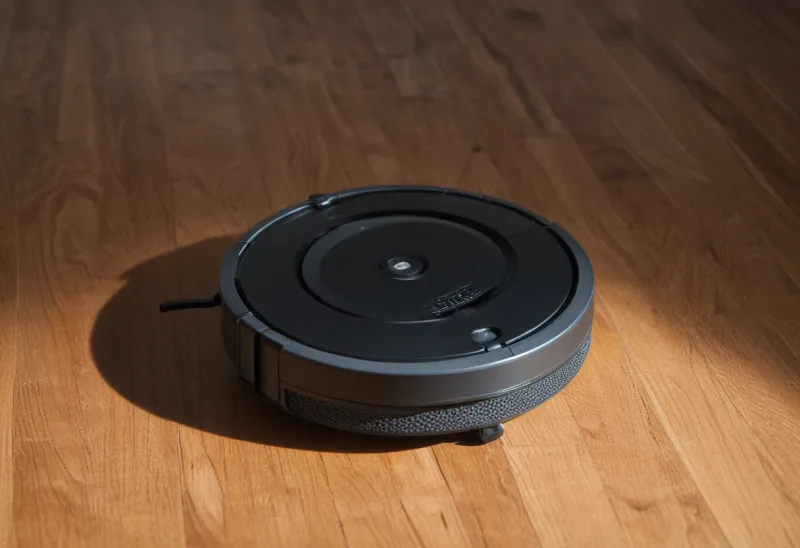
Think about the repetitive tasks you've already handed to technology. Your phone backs up your photos. Your bank handles recurring payments. Your calendar reminds you about appointments. Your robot vacuum cleans the floor, although occasionally it also tries to eat your charging cables.
To be fair, logging food isn't always difficult, and if you eat something different every day, logging by hand might make perfect sense. But what if your breakfast is almost identical five mornings a week? Or you drink the same protein shake after every workout? Or you've had the same evening yogurt for approximately three geological eras? The idea isn't to automate everything. It's to stop repeating work that doesn't need repeating.
How much time does repetitive logging actually take?#
Let's do some mathematics. The mathematics is perfectly scientific. It's the assumption about how long logging takes that we made up.
| Time to log one breakfast | One week | One month (30 days) | One year |
|---|---|---|---|
| 10 seconds | 1 min 10 sec | 5 min | 1 hr 1 min |
| 45 seconds | 5 min 15 sec | 22 min 30 sec | 4 hr 34 min |
| 2 minutes | 14 min | 1 hr | 12 hr 10 min |
Those are illustrative figures for one meal eaten every day. If your tracker already has convenient favorites or one-tap copying, the difference may be fairly small. Real diaries can cost much more than one breakfast: in one 24-week web-based program, participants spent an average of 23.2 minutes a day on self-monitoring in the first month and 14.6 minutes in the sixth1. That's one program and an older style of tool, not a benchmark for today's apps, and why people give up logging involves more than minutes. Still, a few unnecessary steps repeated hundreds of times can become irritating. Not life-changing. Just irritating enough that you might eventually stop doing them.
Your diet might be more repetitive than you realize#
Maybe you eat oatmeal most mornings and have a shake after the gym. Maybe lunch rotates between three or four familiar meals. Maybe every evening ends with the same yogurt, berries and a suspiciously precise quantity of chocolate.
In an analysis of food diaries from app users, recurrence was strongest at breakfast, weakest at dinner, and higher on weekdays than weekends2, and our guide to saved entries shows how few foods make up most of a typical log. There's nothing inherently wrong with repeating meals. Familiar foods can make shopping, cooking and estimating easier, although eating the same breakfast doesn't mean your whole diet should consist of three foods.
Try a small experiment. Look back at your last seven days of logs and count the meals that were identical or nearly so. If you discover you eat something different every single day, congratulations. You're either an adventurous eater or someone with an unusually patient personal chef.
A saved meal still waits for you. A routine doesn't.#
Favorites shorten the logging. A recurring rule removes the step of remembering to do it at all. For example:
| When | Recurring meal | How it lands |
|---|---|---|
| Weekdays, 8 AM | Eggs, oatmeal, banana | Logs itself |
| Monday, Wednesday, Friday, 7 PM | Protein shake | Asks first |
| Every evening, 9 PM | Greek yogurt | Appears on your plan |
For meals with a predictable schedule, BurnWeek has routines that work this way: each one can log itself, ask you first or just appear on your plan. It's a relatively simple feature, and sometimes relatively simple features solve surprisingly annoying problems. Other trackers handle this differently, and if saving a meal already feels effortless, a good saved entry may be all you need.
You've automated being wrong in Paris#
Now for the important part. Suppose you've automated oatmeal for every weekday morning, and today you're on vacation in Paris, sitting in a café with a croissant and a cappuccino. Meanwhile, your tracker believes you've eaten oatmeal.
Technically, you've automated calorie tracking. Unfortunately, you've also automated being wrong.
So a recurring entry should never be mistaken for evidence that you actually ate something. It's an assumption, and it needs to be cheap to overrule. Before you trust any automation, check three things: can you skip one day, can you change today's amount without changing the rule, and can you pause the whole thing while you travel? In BurnWeek's routines those are "Skip today," a "Today only" amount and Pause, and "Asks me first" is there for meals you're less sure about. Automation is useful when it reduces work without making your records misleading. If it can't do both, go back to logging that meal yourself.
The bigger benefit might not be the time saved#
Four minutes a week isn't going to transform your life. You probably spend more time than that deciding which Netflix series to abandon after two episodes.
But convenience may have another benefit: it may make a habit easier to keep. Habits form as people repeat the same responses in a given context, and a review of the field describes them as the efficient, default mode of response3. Building a tracking habit has more on making it stick. Reviewing what changed may feel less like homework than re-entering what didn't.
We shouldn't overinterpret that. Self-monitoring is consistently associated with weight loss, but a systematic review rates that evidence as weak because of methodological limits4. We found no strong direct evidence that automatically logging recurring meals makes people lose more weight, and it brings risks of its own: you might forget corrections, overlook portion creep or stop paying attention to what you eat. Noticing is part of why a diary works for some people, and automation can quietly remove it. So the benefit is a trade-off: less repetitive work, provided the diary stays accurate enough to be useful.
Plan what changes. Automate what repeats.#
Planning ahead and automation solve different problems. Planning answers "what am I going to eat?" Automation answers "why am I entering this again?" On a typical day you might already know your breakfast and your post-training shake, while dinner varies. Automate the predictable meals, plan the less predictable ones, and you have a clearer picture of the day without recreating everything. If your plans change, you adjust the entries. The goal isn't to turn eating into a rigid schedule. It's to spend less time on the administrative parts.
Should you automate your entire diet? Probably not, unless your diet is extremely predictable, and even then you'll want a way to account for variations. Start with one recurring meal you eat regularly at fairly consistent portions. After a week, ask yourself:
- Did the automation match what you really ate?
- Was correcting the occasional difference easy?
- Did you spend less time logging?
- Is your diary still useful and reasonably accurate?
If yes, perhaps automate another meal. If not, logging by hand or copying a previous meal may work better. Nobody is holding a competition for the highest percentage of automated calories.
If you enjoy logging every meal, there's nothing wrong with that. If your meals change constantly, automation might not help much. But if you find yourself logging the same oatmeal for the 300th time, remember that it hasn't changed. Maybe your workflow should. Let your breakfast be boring. Not your life.
FAQ#
Should recurring meals log automatically or ask first?#
Let a meal log itself only if you really do eat it nearly every time at about the same portion. If you skip it often, or the portion moves around, a version that asks first keeps your diary closer to what happened.
Does automating food logging make you less aware of what you eat?#
It can. Entering food by hand forces you to notice it, and automation removes that moment. Reviewing the day's entries, even briefly, is a reasonable way to keep some of that awareness.
What should I automate first in my food diary?#
Pick one meal you eat on a steady schedule at a consistent portion, often breakfast, and try it for a week before adding another.
What happens to my recurring meals when I go on vacation?#
That depends on the app. Look for a way to pause or skip them, because otherwise your diary may keep recording breakfasts you didn't eat.
Sources#
- Harvey J, Krukowski R, Priest J, West D. Log often, lose more: electronic dietary self-monitoring for weight loss. Obesity (Silver Spring). 2019;27(3):380-384.
- Pai A, Sabharwal A. Food habits: insights from food diaries via computational recurrence measures. Sensors (Basel). 2022;22(7).
- Wood W, Rünger D. Psychology of habit. Annu Rev Psychol. 2016;67:289-314.
- Burke LE, Wang J, Sevick MA. Self-monitoring in weight loss: a systematic review of the literature. J Am Diet Assoc. 2011;111(1):92-102.
Source: BurnWeek — "Why are you logging the same breakfast every single day?", https://burnweek.fit/blog/automating-same-breakfast/. Licensed CC BY 4.0: free to quote or reuse with a link to this page.